







Wholesalers diverting Magic Fire powder into protected territories is a problem we hear about often from the distributors our factory supplies. It erodes margins, angers loyal partners, and quietly poisons a brand.
Para impedir que os atacadistas desviem o pó Magic Fire para o seu território, combine cláusulas de exclusividade territorial com direitos de auditoria, códigos de lote serializados em cada embalagem, direitos de distribuição regionais controlados pelo fabricante e embalagens específicas do território. Contratos em camadas, rastreabilidade e monitoramento tornam o desvio detectável, caro e contratualmente arriscado.
No single rule stops diversion. You stop it with a system. Below, I break that system into four practical layers, based on what we have seen work across 30+ export markets.
Que termos contratuais posso usar para impor legalmente a exclusividade territorial aos meus atacadistas?
A German fireplace distributor once showed me his old wholesale agreement. It named a territory but included no audit rights, no penalties, no reporting duties. It was unenforceable in practice.
Enforceable territory protection requires territorial exclusivity clauses, anti-circumvention language, resale and export restrictions, mandatory sell-through reporting, audit rights, Minimum Advertised Price compliance terms, and clawback provisions that deduct damages from rebates. Contracts must also define escalation steps: warning, suspension, then termination.

The biggest lesson we have learned helping importers structure their channels is this: a contract only deters diversion when the wholesaler believes you will actually enforce it. Vague language invites testing. Specific language, backed by data, shuts the door.
The core clauses that actually get enforced
Your authorized distributor agreement should do more than name a region. It should remove both the motive and the escape routes for unauthorized resale. Price arbitrage is the usual motive, so Minimum Advertised Price compliance terms 1 matter as much as the territory map itself. If a wholesaler cannot undercut your territory partner on price, half the incentive to divert disappears.
Here are the terms I recommend buyers negotiate before the first container ships:
| Termo do Contrato | O que Faz | Why It Deters Diversion |
|---|---|---|
| Territorial exclusivity clause | Defines the approved region precisely | Creates a clear legal basis for termination or litigation |
| Anti-circumvention clause | Blocks resale through shell buyers or affiliates | Closes the "we sold to a third party" loophole |
| Sell-through reporting duty | Requires monthly sales and inventory data | Makes abnormal volumes visible early |
| Audit rights | Allows inspection of records and warehouses | Turns suspicion into verifiable evidence |
| MAP policy | Fixes minimum advertised pricing | Removes the price arbitrage that fuels gray market distribution |
| Clawback provision | Deducts invaded partner's lost margin from rebates | Makes diversion financially self-defeating |
Make consequences automatic, not discretionary
Reverse-incentive clawbacks are especially effective because they need no lawsuit. If diverted product appears in another partner's territory, the damages come straight out of the diverting wholesaler's future rebates. The penalty is fast, predictable, and painful. In our experience, one enforced clawback teaches a channel more than three warning letters.
One objection I hear: "Heavy contracts scare off wholesalers." In practice, serious wholesalers accept clear rules. The ones who push back hardest on audit rights are often the ones you should screen out during due diligence anyway.
How can I track batch codes to identify which distributor is diverting my Magic Fire powder?
During a private-label run at our Ningbo facility last year, we printed distributor-specific lot codes on every foil sachet for a US camping brand. Three months later, that single decision solved their leak.
Assign each wholesaler a unique serialized batch code printed on every pouch, carton, and master case. Log codes against shipment records in batch tracking software. When diverted Magic Fire powder appears in your territory, scan the code, match it to the original buyer, and you have proof.
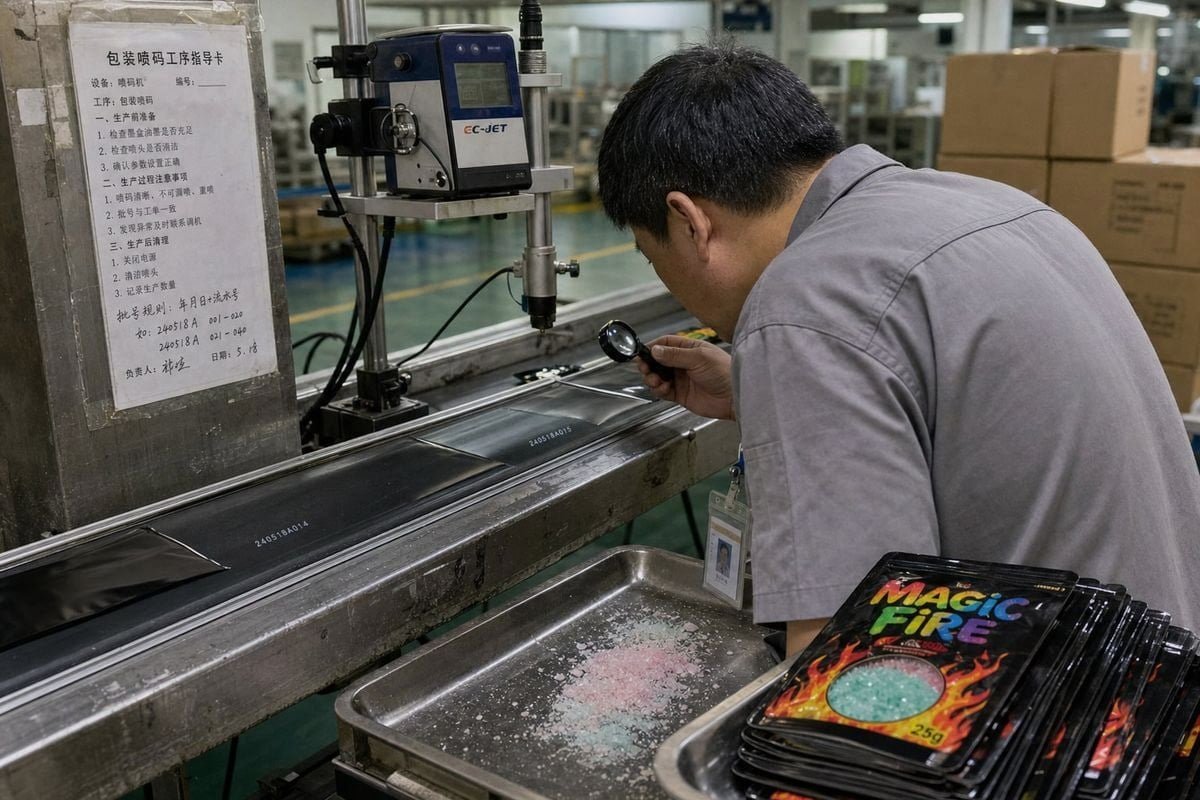
Product serialization 2 does two jobs at once. First, it deters diversion, because wholesalers know every unit can be traced back to them. Second, it accelerates investigation, because a single retail purchase in the wrong territory identifies the leak source within minutes, not months.
How a batch-code tracing system works in practice
The process is simpler than most buyers expect. We build it into production, so it adds almost nothing to unit cost at scale:
- At filling, each production lot receives a unique code linked to one purchase order and one wholesaler.
- Codes print at three levels: individual sachet, retail display box, and master carton. Case-level identifiers matter because diverters often strip retail packaging.
- Your team logs every shipment in batch tracking software 3, matching codes to buyer, date, and destination.
- When suspect product appears — on a marketplace listing, at a retailer, or via a partner complaint — you buy a sample and scan the code.
- The code identifies the original wholesaler. Combined with your audit rights, you now have evidence, not just suspicion.
Go a level deeper with forensic tracers
For high-value programs, invisible forensic chemical tracers take traceability further. A heat-stable molecular marker blended into the powder formulation itself, unique per wholesaler, survives even when product is decanted into unbranded bulk bags. Visible codes can be removed. A tracer inside the crystals cannot. This is the strongest answer to the objection that "sophisticated diverters just repackage everything."
Pair serialization with active market surveillance. Scan marketplace listings weekly, and buy back suspicious units to test. Supply chain visibility only works if someone is actually watching the market where the leaks surface.
Should I work directly with the manufacturer to control regional distribution rights?
The trade-off we discuss most often with new B2B buyers is control versus convenience. Buying through layers of middlemen is easy. But every added layer weakens your grip on where product ends up.
Yes. Working directly with the manufacturer gives you contractually protected regional distribution rights, factory-level serialization, territory-specific packaging, and visibility into who else buys the same product. It removes intermediary layers where gray market distribution typically begins and aligns production data with your channel controls.
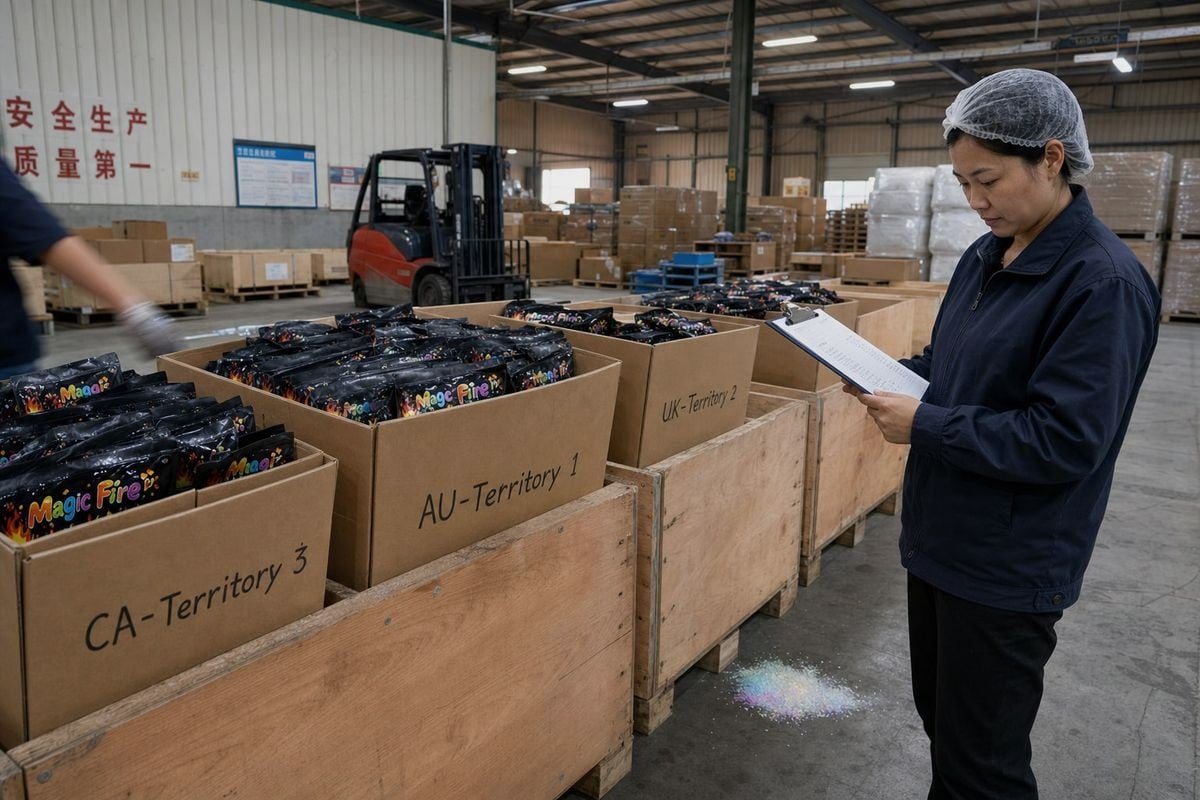
When we structure regional programs from our factory in Liuyang, with production in Ningbo, we can see something no downstream buyer can: the full order picture. If two importers claim non-overlapping territories but their combined volumes far exceed realistic regional demand, that mismatch shows up in our order book first. That upstream vantage point is the foundation of ecosystem-based diversion prevention — manufacturers, importers, and distributors sharing signals early instead of discovering leaks late.
What direct manufacturer partnership changes
| Fator | Buying Through Middlemen | Direct Manufacturer Partnership |
|---|---|---|
| Territory protection | Informal, rarely documented | Written regional rights in the supply agreement |
| Serialization | Usually unavailable | Built in at the filling line, per wholesaler |
| Packaging control | Generic stock packaging | Territory-specific private-label packaging |
| Demand auditing | No visibility | Order volumes checked against regional sell-through |
| Channel conflict management | Reactive, after damage | Proactive, with shared early-warning data |
| Documentação de conformidade | Often incomplete | Full CE, SGS/Intertek 4 test reports per market |
Demand-based order throttling starts at the factory
One of the most effective upstream controls is auditing wholesaler order volumes against verified regional demand. Overstocking is the raw material of diversion: excess inventory has to go somewhere, and it usually goes across a border. Modern programs take this further with predictive inventory throttling — using sell-through data from authorized retail partners to cap maximum order sizes automatically, so "diversion-ready" surplus never accumulates.
A fair objection: direct programs demand more administration, and smaller distributors cannot build enterprise-grade systems overnight. My answer is to prioritize by risk. Start with contractual regional rights and factory serialization, which cost little. Add data-driven throttling as volumes grow. After 17+ years supplying importers across the US and Europe, I can say the buyers who invested early in direct channel control spend far less time firefighting parallel importing later.
What packaging or labeling safeguards can stop cross-border resale of my color-flame products?
A UK buyer once asked us why his French competitor's stock kept appearing in British garden centers. The pouches were identical across both markets. That was the whole problem — nothing on the packaging revealed origin.
Use territory-specific packaging: distinct language versions, region-coded warning labels, market-specific barcodes, unique QR codes per wholesaler, and geo-locked digital safety portals that flag out-of-territory scans. Register trademarks with customs agencies so border officials can seize parallel-imported goods on sight.
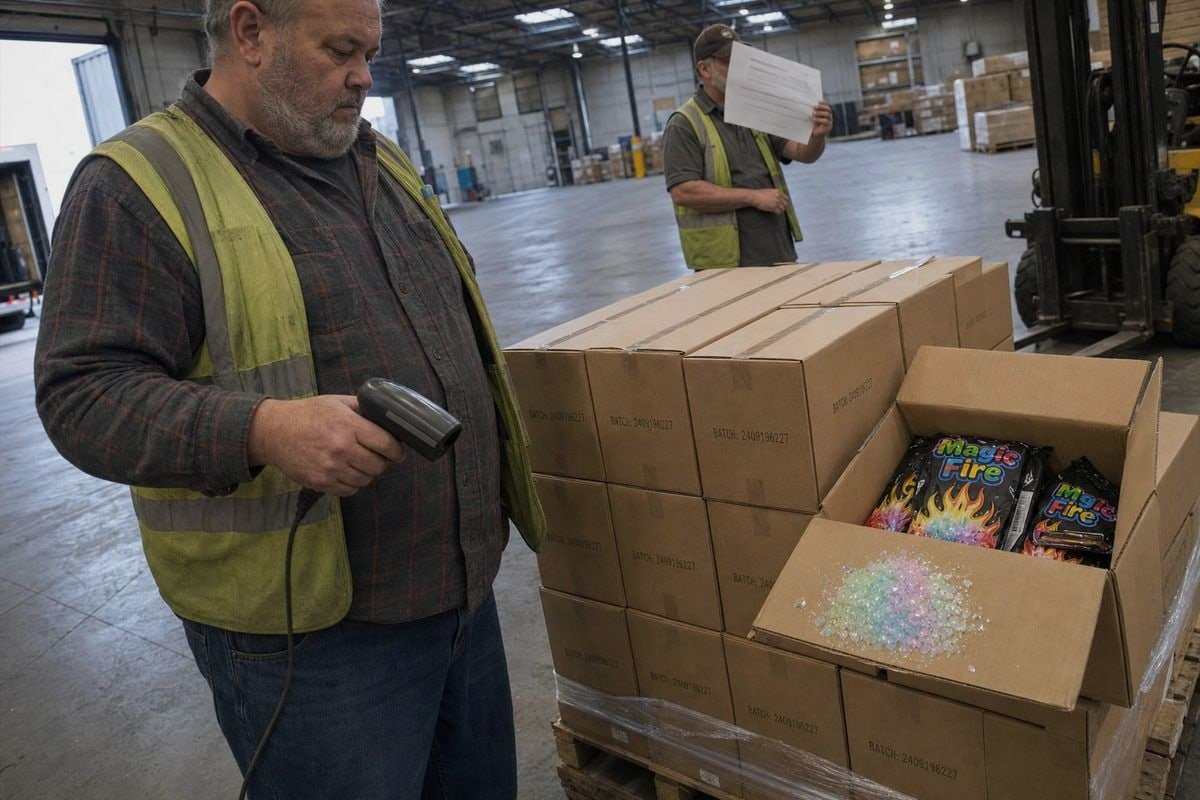
Packaging is your most visible enforcement tool because it travels with every unit. Our OEM/ODM line produces custom boxes, warning labels, and barcodes as standard, and we encourage buyers to treat these elements as anti-diversion infrastructure, not just shelf decoration.
Layer your packaging defenses
Think of packaging safeguards in three tiers, from passive to active:
| Nível | Safeguard | How It Stops Cross-Border Resale |
|---|---|---|
| Passive | Language-specific text, region-coded EAN/UPC barcodes | Diverted stock looks visibly out of place and fails retail scanning systems |
| Semi-active | Distributor-unique QR codes and lot marks | Any unit found out of territory identifies its source instantly |
| Active | Geo-locked digital safety portals | IP-based geo-fencing alerts you when safety instructions are accessed far outside the intended zone |
The geo-locked portal is worth explaining. Color-flame products need clear safety instructions, so linking mandatory usage guidance to a QR-driven digital portal is natural. When that portal detects repeated access from a region where the product was never sold, you get an early diversion signal — often before your territory partner even notices the competition.
Enlist customs as your enforcement partner
Register your trademarks and product designs 5 with national customs agencies in your key markets. Once recorded, border officials can detain suspected gray-market shipments 6 moving between international territories. Combined with an Authorized Reseller program, this also simplifies removing unauthorized resale listings from marketplaces, because platforms respond faster to rights holders with documented reseller lists.
One caution from our compliance work: keep every regional variant fully certified. We maintain ISO 9001 7, BSCI, CE, and SGS/Intertek documentation per packaging version, because a territory-specific label that lacks the right market's warning format creates a new compliance problem while solving a diversion one. Not every out-of-place unit is deliberate diversion, either — sometimes it is a retailer relocation or a one-off clearance. Treat packaging signals as investigation triggers, then confirm through your batch records before escalating.
Conclusão
Diversion thrives on weak contracts, invisible products, and blind channels. Build layered defenses — exclusivity clauses, serialization, direct manufacturer control, and territory-coded packaging — and Magic Fire powder diversion becomes traceable, costly, and rare.
Notas de rodapé
1. Background concept explaining how price-floor policies reduce arbitrage incentives for diversion. ↩︎
2. GS1 sets global standards for serialization and barcoding used in supply chain traceability. ↩︎
3. Traceability concept underpins the batch tracking system described for identifying diverting wholesalers. ↩︎
4. SGS is a leading authority on product testing and compliance documentation referenced in the article. ↩︎
5. WIPO governs trademark registration systems that enable customs enforcement against parallel imports



 English
  Spanish
  German
  French
  Arabic
  Portuguese
Participe da conversa