






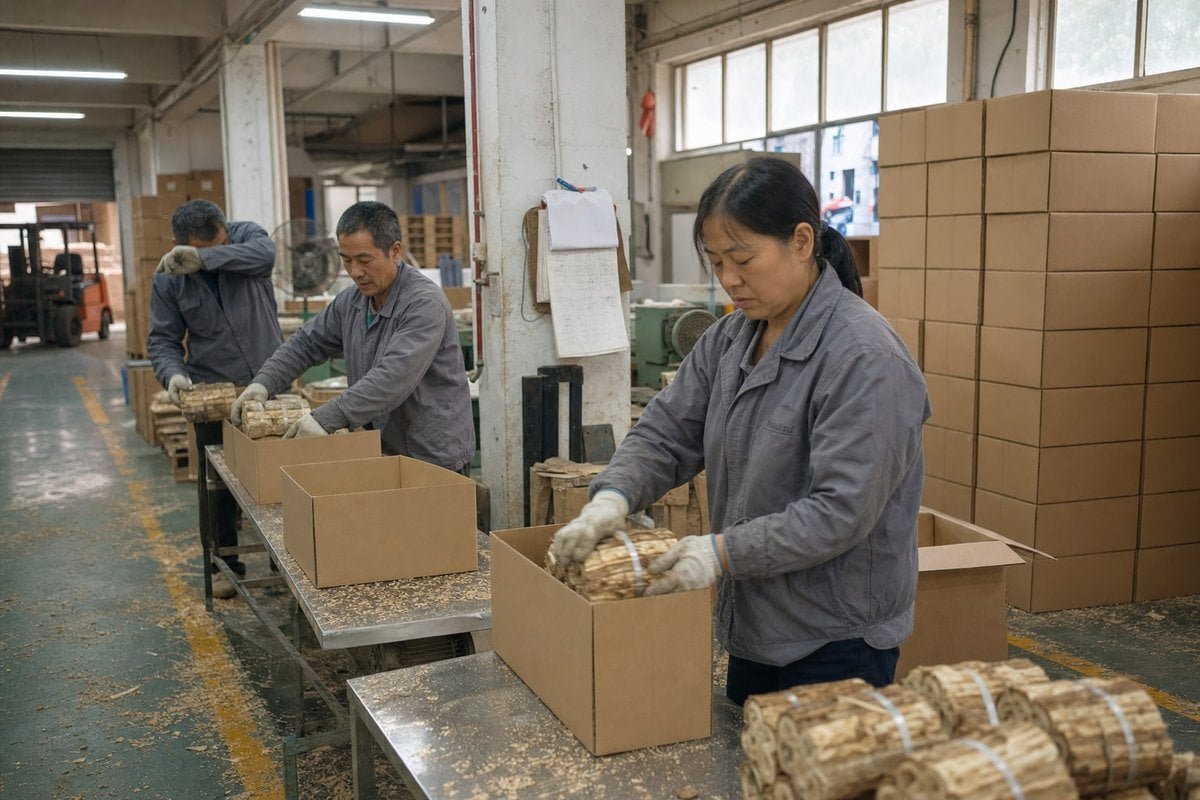
Chaque automne, notre chaîne de production à Ningbo atteint sa pleine capacité car trop d'acheteurs planifient leur rythme de stockage pour les saisons de pointe des allume-feu pour bois en hiver et en été bien trop tard.
Planifiez votre rythme de stock autour de deux pics : commandez le stock d'hiver à la fin du printemps ou en été, et le stock de la saison de camping à la fin de l'hiver. Passez les commandes en gros 3 à 4 mois avant chaque pic, puis réservez les mois de pic eux-mêmes pour de petites commandes de réapprovisionnement correctives uniquement.
Cette règle de calendrier semble simple. Mais pour la respecter, il faut délais 1, les MOQ, l'équilibre des stocks et les contrôles de conformité. Laissez-moi vous expliquer chaque point.
Combien de temps à l'avance dois-je passer des commandes pour éviter de manquer les périodes de forte demande hivernale et estivale ?
En septembre dernier, un distributeur allemand nous a demandé de produire en urgence 40 000 rouleaux de bois trempés dans la cire avant octobre contrôles de conformité 2. Nos lignes étaient déjà entièrement réservées. Il a appris la leçon du calendrier à ses dépens.
Passez vos commandes en gros pour la saison hivernale entre mai et juillet, et vos commandes pour la saison de camping estivale entre janvier et février. Cela laisse 60 à 90 jours pour la production et l'expédition, de sorte que les marchandises arrivent dans votre entrepôt avant que la demande n'augmente fin septembre ou fin printemps.

Le principe fondamental est le suivant : l'été est la saison de planification, l'hiver est la saison de consommation de paraffine 3. La demande de produits de combustible de chauffage d'hiver commence à augmenter fin septembre. Elle culmine de fin octobre à janvier. Si votre bon de commande arrive à notre usine en septembre, vous êtes déjà en concurrence avec tous les autres acheteurs pour les mêmes créneaux de production. Le fret se raréfie également au quatrième trimestre, donc que ceux qui s'affolent en août. 4 deviennent plus lents et plus chers exactement quand vous avez besoin de rapidité.
La même logique s'applique en sens inverse pour la saison extérieure. La préparation de la saison de camping pour les détaillants aux États-Unis et en Europe commence au début du printemps. La demande de foyers, de barbecues et de glamping s'étend de mai à août. Vos stocks destinés à l'été doivent donc être expédiés de Chine en mars au plus tard.
Un calendrier de planification inversée simple
Travaillez à rebours à partir de votre date de mise en rayon. Voici le calcul que nous faisons avec les acheteurs :
| Étape | Durée typique | Exemple (Pic hivernal) |
|---|---|---|
| Cible de mise en rayon | — | Fin septembre |
| Distribution du port à l'étalage | 2–3 semaines | Début septembre |
| Fret maritime (Chine vers États-Unis/UE) | 4–6 semaines | Départ fin juillet |
| Production et CQ | 3–5 semaines | Commande confirmée d'ici mi-juin |
| Échantillonnage et approbation (nouveaux SKU) | 2–4 semaines | Commencer en mai |
Ajoutez une marge pour les fêtes. Le Nouvel An chinois (fin janvier à mi-février) supprime deux à trois semaines de capacité de production 5, ce qui affecte directement les commandes de la saison estivale. D'après notre expérience d'exportation dans plus de 30 pays, les acheteurs qui confirment leurs commandes en mai et juin ont le premier choix des créneaux de production, de meilleurs tarifs de fret et une communication plus calme. Les acheteurs qui appellent en octobre obtiennent ce qui reste.
Quels MOQ et délais de production dois-je prévoir pendant les périodes creuses par rapport aux périodes de pointe ?
Un compromis que nous pesons constamment dans notre usine de Liuyang est la flexibilité de la ligne par rapport à l'efficacité. Les petites séries d'essai en juin sont faciles. La même demande en novembre nous oblige à interrompre un programme de production complet.
Attendez-vous à des MOQ standard d'environ un petit conteneur mélangé pour les commandes sous marque privée, avec une production de 25 à 35 jours pendant les mois creux. Pendant la haute saison, les délais s'étirent souvent à 45 à 60 jours, et il devient plus difficile de négocier des MOQ flexibles ou d'essai.
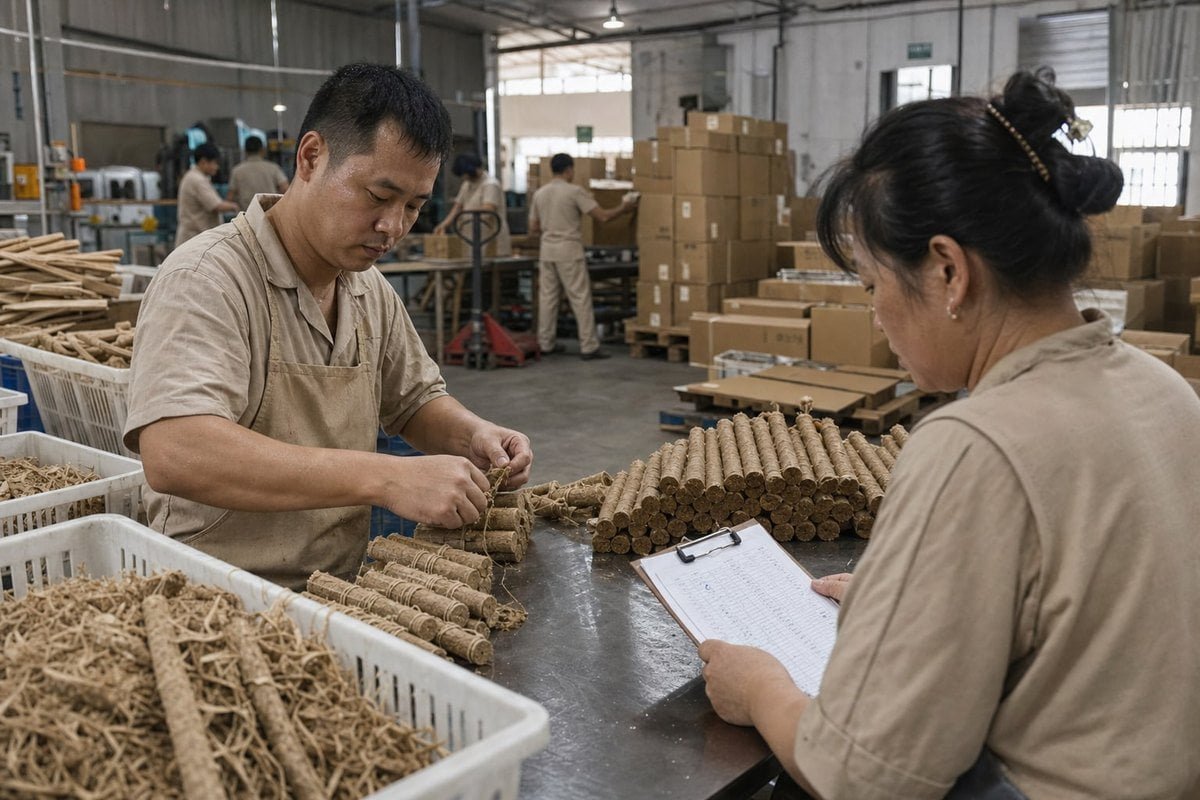
Les MOQ et les délais de livraison ne sont pas des chiffres fixes. Ils respirent avec la saison. Comprendre ce rythme est le cœur de l'optimisation des délais de livraison, et cela façonne directement votre flux de trésorerie et votre risque.
Pourquoi les délais de livraison s'allongent en haute saison
Trois choses se produisent simultanément à partir de septembre. Premièrement, le volume des commandes augmente, créant des files d'attente à chaque ligne de production. Deuxièmement, les fournisseurs de matières premières — fibre de bois 6, la paraffine, le carton d'emballage — sont confrontés à la même pression, ce qui ralentit l'approvisionnement en matériaux entrants. Troisièmement, l'espace de conteneurs au départ des ports chinois se raréfie avant les fêtes de fin d'année occidentales. Chaque facteur à lui seul ajoute des jours. Ensemble, ils peuvent ajouter un mois.
Hors saison vs. haute saison : ce qui change pour l'acheteur
| Facteur | Hors saison (février-juillet) | Haute saison (août-décembre) |
|---|---|---|
| Délai de production | 25–35 jours | 45–60 jours |
| Flexibilité du MOQ | Élevé — commandes d'essai bienvenues | Faible — séries complètes prioritaires |
| Configuration d'emballage personnalisé | Facile à planifier | En file d'attente derrière les commandes répétées |
| Disponibilité du fret | Bons tarifs stables | Tarifs serrés et majorés |
| Délai d'échantillonnage | 1–2 semaines | 2–4 semaines |
Pour les acheteurs qui testent un nouveau marché, cela est encore plus important. Nous effectuons souvent des MOQ d'essai plus petits pour les importateurs débutants au printemps, précisément parce que nos lignes ont de la place pour expérimenter à ce moment-là. Une série d'essai de rouleaux de bois trempés dans la cire avec votre boîte de marque privée est un projet à faible risque en avril. En octobre, la même configuration est en concurrence avec la réorganisation de 200 000 pièces d'un client régulier.
Mon conseil pratique : négocier les MOQ, changements d'emballage et échantillonnage de nouveaux SKU en basse saison. Verrouillez vos volumes de haute saison tôt avec un calendrier confirmé. Ensuite, la haute saison devient exécution, pas négociation. C'est ainsi que nos distributeurs les plus anciens aux États-Unis et en Allemagne gèrent leurs programmes d'approvisionnement en bois d'allumage en vrac depuis des années.
Comment puis-je équilibrer les niveaux de stock pour éviter le surstockage en basse saison ou les ruptures de stock pendant les mois de pointe ?
Un acheteur britannique m'a dit un jour que son entrepôt contenait encore un demi-conteneur d'allume-feu en mars — de l'argent gelé sur les étagères pendant six mois. L'année suivante, il a réparti le même volume différemment et a tout vendu proprement.
Utilisez un modèle de type « en gros plus réapprovisionnement » : passez 70 à 80 % du volume saisonnier prévu dans une commande groupée pré-pic, conservez 15 à 20 % de stock de sécurité pour les coups de froid précoces, et couvrez le reste avec un ou deux petits réapprovisionnements en cours de saison basés sur les données de vente réelles.

Une bonne gestion des stocks pour les produits saisonniers est vraiment une discipline de prévision. La courbe de demande pour les allume-feu en gros est prévisible dans sa forme mais variable dans sa taille. Les hivers peuvent arriver tôt ou tard. Un coup de froid en octobre peut ramener trois semaines de demande. Votre plan doit donc avoir une base solide et un bord flexible.
Pas à pas : construire votre plan de stock saisonnier
- Examiner les données de la saison dernière. Extraire les ventes mensuelles par SKU. Notez quand les ruptures de stock ou les stocks dormants se sont produits. C'est la base de prévision de la demande saisonnière.
- Définir la commande de base. Engagez 70 à 80 % de votre prévision en une seule commande en gros, programmée pour arriver avant le début de la saison.
- Ajoutez un stock de sécurité. Prévoyez une marge supplémentaire de 15 à 20 % pour les pics de demande en début de saison, en particulier les pics imprévisibles du premier gel.
- Planifier des points de contrôle de réapprovisionnement. Examiner les ventes à la semaine 4 et à la semaine 8 de la saison. Déclencher une petite réapprovisionnement si la vélocité dépasse les prévisions.
- Traitez les commandes d'hiver comme correctives uniquement. Les commandes en cours de saison ont des délais de livraison longs, elles doivent donc ajuster le plan, pas le porter.
La discipline de stockage protège votre marge
Le risque de surstock n'est pas seulement de l'argent. C'est l'état du produit. La durée de conservation des allume-feu est longue lorsque le stockage est correct, mais les produits à base de fibres de bois et de cire nécessitent des conditions sèches et ventilées. Suivez les mêmes règles que les bonnes solutions de stockage de bois de chauffage : gardez les palettes hors du sol, assurez la circulation de l'air, évitez les coins humides et faites tourner les stocks Premier Entré, Premier Sorti. Nos rouleaux enrobés de cire sont scellés contre l'humidité, mais les boîtes de vente au détail se dégradent toujours dans les entrepôts humides. La rotation FIFO signifie que le stock restant de la saison dernière se vend en premier, et que l'emballage reste frais sur les étagères.
Encore une nuance : l'été n'est pas une saison morte. Les feux de camp, le camping et l'utilisation du barbecue créent une courbe de demande secondaire de juin à août. Conserver une modeste base de départ portable et compacte toute l'année lisse votre flux de trésorerie et maintient vos comptes de vente approvisionnés entre les deux pics.
Quelles certifications et contrôles qualité dois-je confirmer avant d'augmenter les stocks pour la demande saisonnière ?
Les échecs de conformité nuisent le plus en haute saison. Nous avons vu une fois l'expédition d'un concurrent rester bloquée dans les douanes de l'UE jusqu'en novembre en raison de documents de test manquants — un hiver entier de revenus perdus à cause de la paperasse.
Avant d'augmenter le stock saisonnier, confirmez que l'usine détient les audits ISO 9001 et BSCI, la conformité CE au niveau du produit et les rapports de tests actuels de tiers auprès de laboratoires tels que SGS ou Intertek. Vérifiez également les procédures de contrôle qualité par lot, les étiquettes d'avertissement et les exigences d'emballage spécifiques au marché.
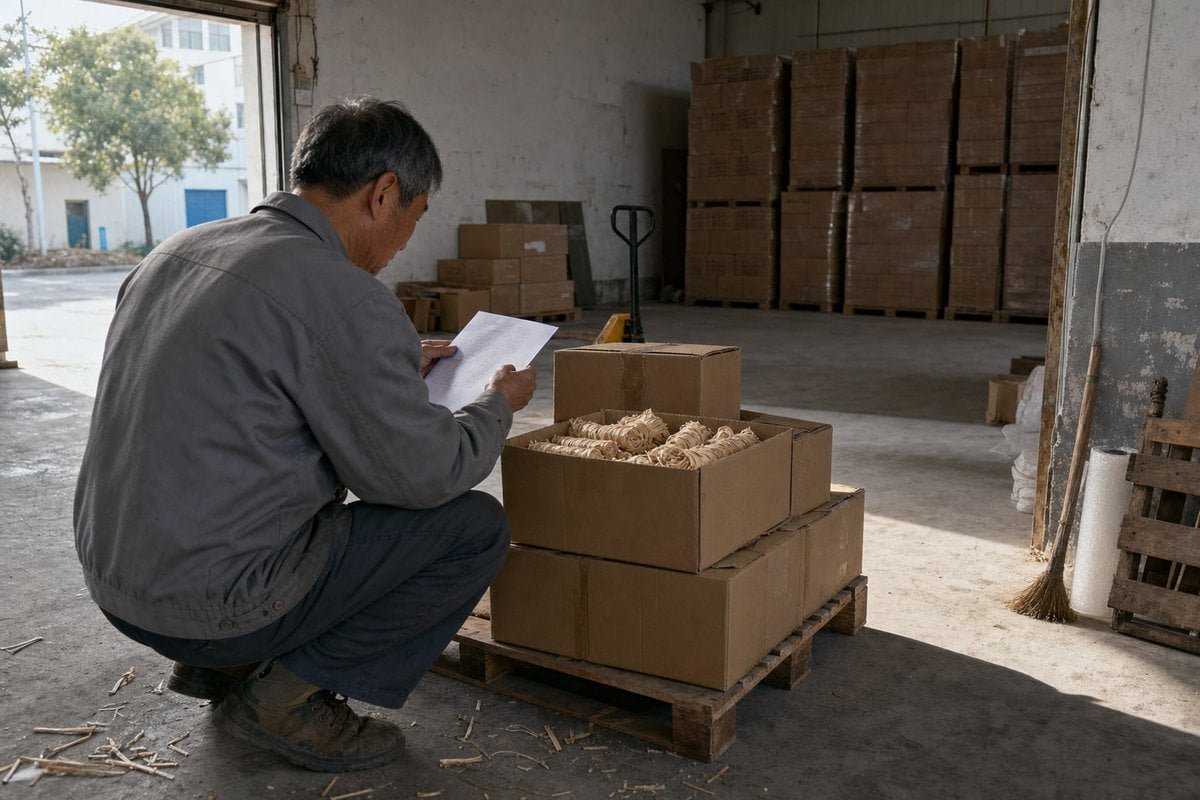
La certification n'est pas une formalité pour les produits d'allumage. C'est la porte entre votre conteneur et votre étagère de vente au détail. Les grands canaux de vente au détail et les distributeurs établis considèrent la conformité comme une exigence stricte, tout comme les autorités douanières aux États-Unis et dans l'UE. Augmenter le volume avant de vérifier les documents multiplie le risque : un défaut de conformité sur 5 000 unités est un problème ; sur 100 000 unités, c'est une catastrophe.
Votre liste de contrôle de conformité avant la haute saison
| Article | Ce qu'il faut vérifier | Pourquoi c'est important |
|---|---|---|
| ISO 9001 | Certificat de système de qualité d'usine valide | Prouve un contrôle de production cohérent et documenté |
| Audit BSCI | Rapport d'audit de conformité sociale récent | Exigé par de nombreuses chaînes de vente au détail de l'UE et des États-Unis |
| Conformité CE | Conformité au niveau du produit pour votre marché | Exigence légale pour l'accès au marché de l'UE |
| Rapports SGS / Intertek | Rapports de test actuels correspondant à votre SKU exact | Confirme indépendamment les matériaux et les performances de combustion |
| Dossiers de contrôle qualité des lots | Journaux de conservation des échantillons et d'inspection des lots | Garantit que la production de masse correspond à votre échantillon approuvé |
| Étiquettes et emballages | Étiquettes d'avertissement, codes-barres, exigences linguistiques | Empêche les blocages douaniers et les rejets des détaillants |
Contrôles de qualité qui protègent la cohérence de la haute saison
Dans notre usine, chaque lot de production d'allume-feu en bois passe par des tests de temps de combustion 7, des contrôles d'humidité sur la fibre de bois et une vérification du poids du revêtement de cire. Nous conservons des échantillons de chaque lot. C'est ce que signifie réellement "le premier échantillon reflète la production de masse" en pratique — c'est un système de contrôle qualité, pas une promesse. Avant votre montée en puissance saisonnière, demandez exactement cela à votre fournisseur : registres de lots, échantillons conservés et les plages de tolérance qu'ils respectent.
Vérifiez également la fraîcheur de la documentation. Les rapports de test vieillissent. Un rapport d'il y a quatre ans sur une formulation différente ne satisfera pas un agent de conformité pointu d'un grand détaillant. Demandez des rapports datant de la fenêtre de validité attendue par votre marché, et correspondant au produit, à l'emballage et à la composition exacts que vous commandez. Confirmez tout cela en basse saison, lorsqu'il y a le temps de corriger les lacunes. La haute saison est le pire moment possible pour découvrir un certificat manquant.
Conclusion
Les hautes saisons récompensent les acheteurs qui planifient tôt et punissent ceux qui réagissent tard. Les ruptures de stock, les primes de fret et les blocages douaniers sont tous liés à des erreurs de calendrier commises des mois auparavant.
La solution est le rythme, pas la chance. Commandez en gros en basse saison, vérifiez la conformité avant d'augmenter le volume, maintenez un stock de sécurité raisonnable et traitez les mois de pointe comme des fenêtres de réapprovisionnement. Après plus de 17 ans d'approvisionnement en produits d'allumage pour des distributeurs dans plus de 30 pays, nous avons vu ce schéma distinguer les programmes saisonniers prospères de ceux qui luttent. Mettez votre calendrier au point, et la haute saison se gère d'elle-même.
Notes de bas de page
Définition faisant autorité de Wikipédia sur les délais de livraison dans la gestion de la chaîne d'approvisionnement. ↩︎
Entrée faisant autorité de Wikipédia sur les normes de gestion de la qualité ISO 9001. ↩︎
Référence détaillée de Wikipédia sur les propriétés et les applications de la cire de paraffine. ↩︎
Aperçu de Wikipédia sur la logistique et son rôle dans les chaînes d'approvisionnement mondiales. ↩︎
Explication faisant autorité sur la capacité de production et l'utilisation dans la fabrication. ↩︎
Aperçu complet de Wikipédia sur les caractéristiques et les utilisations des fibres de bois. ↩︎
ASTM International est la principale autorité en matière de normes d'essai sur le feu et l'inflammabilité. ↩︎



 English
  Spanish
  German
  French
  Arabic
  Portuguese
Rejoignez la conversation