
Asking for recyclable packaging for Magic Fire Powder sounds simple until vague "green" claims cost you a rejected shipment. On our production line, we see buyers burned by this every season.
To ask suppliers for recyclable packaging for Magic Fire Powder, send a one-page brief stating your material goals, then request material composition disclosures, third-party certificates like FSC or GRS, recyclability test reports, and physical samples. Verify claims with documents, not logos, before any bulk order.
That is the short answer. Now let me walk you through exactly how to run this conversation, step by step, based on what actually works with real factories.
What questions should I ask to confirm my supplier's packaging is truly recyclable?
Last year, a German distributor asked us why a competitor's "recyclable" foil pouch failed their retailer's audit. The answer was simple: the laminate was mixed-material and unsortable. We rebuilt their spec together.
Ask what the packaging is made of and in what percentages, whether it is mono-material or mixed-material, which recycling stream it fits, whether inks, adhesives, and closures are recycling-compatible, and whether local recovery facilities in your target market can actually process it.

The core problem is the gap between "technically recyclable" and "widely recyclable." A supplier can truthfully say a film is recyclable in theory, while no curbside program 1 in your market will ever accept it. Your questions need to close that gap before money changes hands.
Start with material composition
Ask for the exact structure, layer by layer. For a Magic Fire Powder pouch, that means the film type, any barrier coating, the ink system, and the adhesive. In our experience exporting to 30+ countries, the honest suppliers answer this in one email. The evasive ones send you a brochure.
Then ask about the whole package system
Recyclability depends on every component. A recyclable PE pouch with a foil zipper or an incompatible label is no longer recyclable in practice. Push on inks, coatings, adhesives, closures, and labels specifically.
Here is the question set I recommend sending verbatim:
| Pregunta | What a good answer looks like |
|---|---|
| What is this made of, in percentages? | A full material declaration, layer by layer |
| Is it mono-material or mixed-material? | A clear yes/no with the resin or fiber named |
| Which recycling stream is it designed for? | Curbside, store drop-off, or specialty — stated plainly |
| Are inks, adhesives, and closures compatible? | Confirmation with the ink system named |
| Has recyclability been tested or only claimed? | A test report or recognized certification |
| Does it work in my target market's infrastructure? | Market-specific answers, not "recyclable worldwide" |
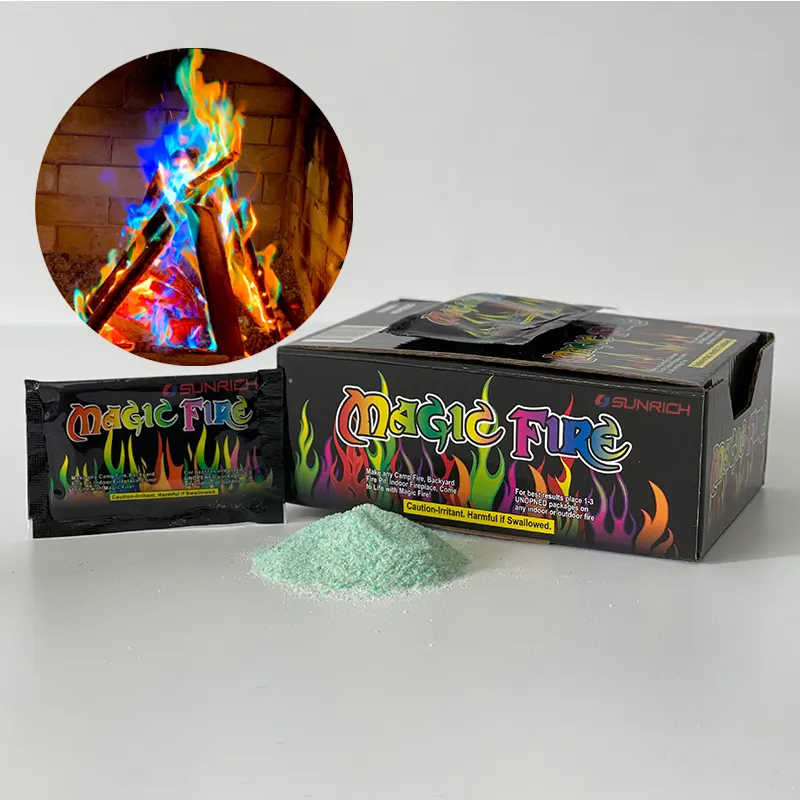
One more powder-specific question matters: does the recyclable structure still deliver a moisture barrier? Our color-flame packets need seal integrity, or the crystals clump. A package that fails that test is waste, no matter how recyclable it is.
How do I request eco-friendly packaging samples before placing a bulk order?
A trade-off we weigh constantly: sample speed versus sample accuracy. A fast hand-made sample tells you little. A production-equivalent sample takes longer but predicts what containers will actually arrive.
Send a written brief with dimensions, fill weight, shipping method, and sustainability goals, then request production-equivalent samples — not hand-made mockups — along with spec sheets and photos. Run transit, drop, and moisture tests, and confirm a pilot run of 100–500 units before committing.

Samples are your only real evidence before mass production. So treat the solicitud de muestra 2 as a small project, not a courtesy ask. Here is the process we run with our own OEM buyers, and it is the same process I would use on any supplier of eco-friendly packaging materials.
Step one: write the packaging brief
Before you request anything, send a one-page brief. Include product dimensions, fill weight, target run quantity, shipping method, storage conditions, and your sustainability priority. Be specific about that last point. "Sustainable" can mean curbside-recyclable, post-consumer recycled (PCR) content 3, reduced plastic, or mono-material design — and those are four different quotes. Also ask the supplier about "right-sizing" the sachet and display box. Eliminating void space cuts material waste and improves shipping density, which lowers your freight cost per unit.
Step two: demand production-equivalent samples
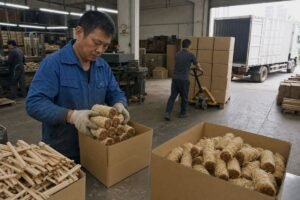
Ask that samples come off the same line, same tooling, and same material lot as production would. At our Ningbo facility, we insist on this ourselves, because it is why our first sample reliably matches mass-production quality. Request spec sheets and Material Safety Data Sheets (MSDS) alongside the physical samples so your compliance team reviews everything in one pass.
Step three: test like the product will really live
- Fill samples with actual Magic Fire Powder, not sand or rice.
- Run drop testing and transit simulation — powder is heavy and abrasive, and thin biodegradable barrier films can puncture.
- Monitor moisture-barrier performance over several weeks, not days.
- Check seal integrity after temperature swings that mimic sea freight.
Step four: pilot before you scale
A phased transition with a small pilot run of 100 to 500 units lets you monitor real shelf life and real customer handling before a full production shift. Every buyer who skips this step regrets it eventually.
What certifications should I look for when sourcing recyclable packaging suppliers?
When we prepared our own Informes de pruebas de SGS e Intertek 4 years ago, I learned a hard lesson: buyers do not trust logos anymore, and neither should you. Certificates have scopes, dates, and limits.
Look for FSC certification for paper and board, GRS for recycled content, ISO 9001 for quality systems, and BSCI for social compliance. Always request the actual certificate with its scope and expiration date, plus test reports supporting any recyclability or compostability claim.

Certification is where sustainable sourcing becomes verifiable instead of aspirational. A logo on a website proves nothing. A certificate with a scope statement, an issuing body, and a valid date proves a lot. Here is how the main certifications map to a Magic Fire Powder packaging project:
| Certificación / Documento | Confirma que el proceso de dosificación de fragancias está controlado y es repetible | Por qué le importa |
|---|---|---|
| FSC | Responsible fiber sourcing for FSC-certified paperboard and kraft bags | Supports retailer audits and ESG reporting on paper components |
| GRS | Verified post-consumer recycled (PCR) content with chain of custody | Backs any recycled-content claim you print on the pack |
| ISO 9001 | Supplier quality management system | Predice la consistencia lote a lote, no solo una buena muestra. |
| BSCI | Auditoría de cumplimiento social | Requerido por muchos canales de abastecimiento minorista de la UE y EE. UU. |
| Informes de prueba SGS / Intertek | Material safety and performance testing | Third-party proof, not supplier self-declaration |
| ASTM D6400 | Industrial compostability standard | Relevant only if a supplier claims compostable — verify it here |
| Hoja de datos de seguridad del material | Composición química y datos de manipulación | Critical for chemical safety compliance with a flame-colorant powder |
Three verification habits will protect you. First, ask for the certificate document itself, then check the scope — an FSC certificate 5 for one paper mill does not cover a different converter. Second, check expiration dates; lapsed certificates are surprisingly common. Third, ask what happens if you need to verify the claim later. A confident supplier will name the certificate number and the issuing body so you can check independently.
One distinction trips up many buyers: recycled content and recyclability are not the same claim. A pouch can contain PCR content yet be hard to recycle, or be fully recyclable with zero recycled material. For strong supply chain sustainability, ask for both where feasible — recyclable design plus documented recycled content — and keep the paperwork for each claim separate.
Can I get custom recyclable packaging without increasing my minimum order quantity?
A UK buyer once told me she assumed custom eco packaging meant tripling her MOQ. We shipped her private-label kraft pouches at her standard trial quantity. The assumption was wrong — but only because of how we structured it.
Yes, in many cases. Choose stock recyclable structures with custom printing rather than custom tooling, negotiate longer-term volume commitments to offset supplier R&D costs, and work with factories that keep recyclable films and kraft materials in standing inventory. Structure matters more than volume.

MOQ pressure on sustainable packaging is real, but it is negotiable if you understand where the costs actually sit. Custom tooling, custom material sourcing, and custom printing each carry different minimums. Separate them, and you find room to move.
Where MOQ pressure actually comes from
| Customization type | Impacto del MOQ | How to reduce it |
|---|---|---|
| Custom printed stock pouch | Bajo | Digital printing on standing recyclable film stock |
| Custom pouch size or shape | Medio-Alto | Adapt your fill weight to an existing die line |
| Custom material structure | Alto | Choose proven mono-material or kraft options already in production |
| Custom closures or windows | Medio | Use standard recycling-compatible components |
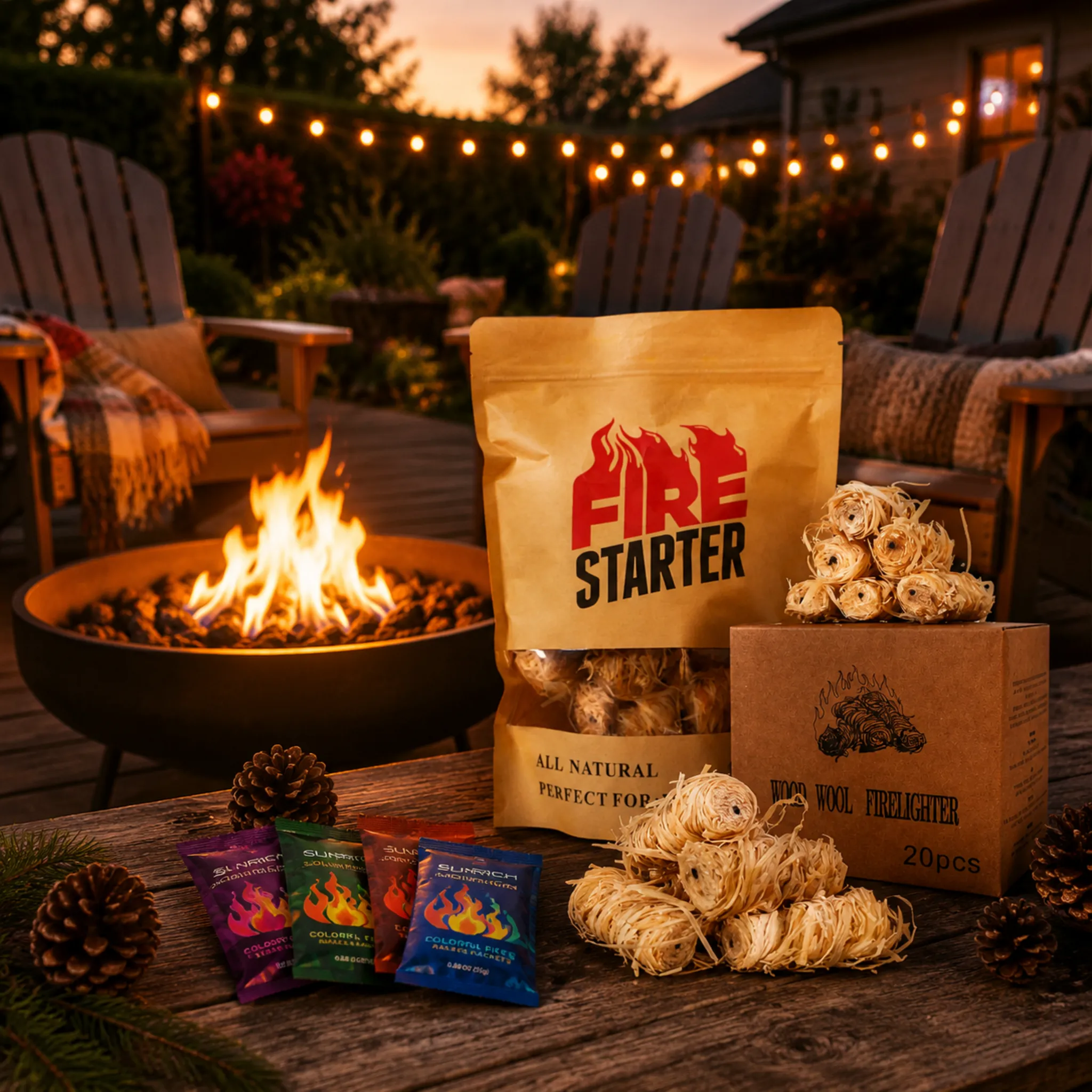
The cheapest path to custom recyclable packaging is custom branding on a standard recyclable structure. At our factory, we already run Magic Fire packets in plastic bags, kraft bags, and jars, so a buyer who wants moisture-resistant recyclable pouches with their own artwork is printing on a structure we make every week. That is why we can support flexible MOQs for trial orders — no new tooling, no new material qualification.
Negotiation levers that work
First, offer a longer-term commitment. Suppliers absorb the higher raw material and R&D cost of sustainable structures 6 more willingly when volume is predictable over multiple orders, even if each order is modest. Second, propose a phased plan: pilot quantity now, standard MOQ on reorder. Third, consolidate. If your recyclable pouch, FSC-certified display box, warning labels, and barcodes all come from one one-stop OEM partner, your combined order value justifies flexibility that four separate vendors would never offer.
Consider structure alternatives too
For a fire-side product, ask suppliers about high-barrier mono-material laminates 7 — all-PE or all-PP — that protect the powder while staying compatible with existing plastic recycling streams. For commercial venues like festivals or event venues, a closed-loop bulk refill model with a large recyclable drum and a measured scoop can replace hundreds of sachets entirely. Custom does not have to mean complicated.
Conclusión
Vague green requests get vague quotes. A written brief, documented certifications, tested samples, and smart MOQ structuring turn recyclable packaging for Magic Fire Powder from a slogan into a shelf-ready reality.
Notas al pie
1. Defines the curbside collection infrastructure used to determine if packaging is widely recyclable in consumer markets. ↩︎
2. Explains the role of physical samples in verifying product quality and specifications before mass production. ↩︎
3. Authoritative EPA resource for recycled content standards and procurement guidelines. ↩︎
4. Reference to global inspection and testing leaders used to verify material sustainability and safety claims. ↩︎
5. Official explanation of the FSC labeling system for verifying responsibly sourced paper and wood products. ↩︎
6. Overview of the design and material principles required to create environmentally responsible packaging systems. ↩︎
7. Technical guidelines for designing plastic packaging that is compatible with existing recycling infrastructure. ↩︎

 English
 Spanish
 German
 French
 Arabic
 Portuguese
Únete a la conversación