







Every autumn, buyers call our factory begging for capacity guarantees from wood fire starter suppliers — and by then, our production lines are usually already booked solid.
To negotiate pre-peak-season capacity guarantees with wood fire starter suppliers, start 4–6 months early, bring a credible tiered demand forecast, offer a deposit or firm volume commitment, and lock reserved production slots, lead times, and shortfall remedies into a written capacity reservation agreement.
That is the short answer. The full playbook takes more explaining. Below, I walk through timing, contract language, MOQ trade-offs, and quality control — the four questions buyers ask us most often.
How early should I start locking in capacity before peak season hits my wood fire starter suppliers?
Last July, a German distributor emailed our sales team asking for October delivery of wax-dipped wood rolls. Our Ningbo lines were already 80% allocated. He learned timing the hard way.
Start capacity negotiations 4–6 months before peak season — typically April to June for winter fire starter demand. Suppliers allocate production during summer troughs, so early buyers secure reserved slots, early-buy pricing, and stable lead times before schedules fill completely.
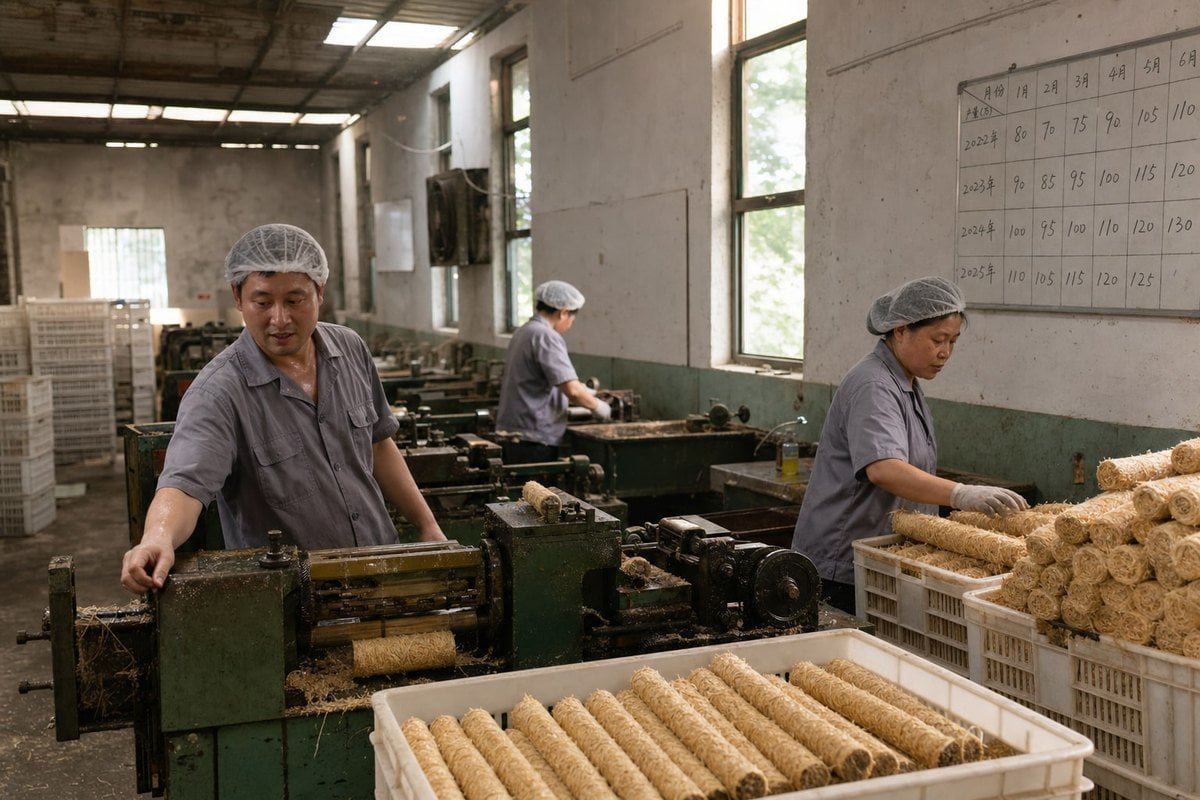
The wood fire starter business is brutally seasonal. Demand concentrates from September through January in most of our export markets. But production capacity is flat across the year. That mismatch is the whole reason this negotiation exists. Suppliers cannot magically add kilns, dipping tanks 1, or trained packing crews in October. Capacity is easier to sell out than to create.
Why the summer window matters
During spring and summer, most fire starter factories run below full utilization. This is exactly when suppliers are hungriest for committed volume. In our experience exporting to the US and Germany, buyers who confirm orders in April or May often receive early-buy pricing advantages, first choice of delivery windows, and more flexible private label manufacturing support 2, because artwork and packaging approvals are not rushed.
Wait until August or September, and the power flips. Available slots shrink. Freight rates climb. Your negotiating leverage evaporates.
A practical pre-peak timeline
| Months Before Peak | Acción del comprador | Por qué importa |
|---|---|---|
| 6 meses | Review last season's sell-through, stockouts, and forecast demand by SKU | Builds the credible forecast suppliers respond to |
| 5 meses | Approach suppliers with a reservation request and target volumes | Supplier planning capacity is still open |
| 4 meses | Sign the capacity reservation agreement; pay deposit | Locks slots before allocation tightens |
| 3 months | Finalize packaging, labels, and compliance documents | Avoids artwork delays eating production time |
| 2 meses. | Confirm first shipments; update rolling forecast | Enables lead time optimization and freight booking |
| 1 month | Release surge or option volumes if demand trends up | Uses pre-negotiated flexibility bands |
Demand forecasting does not need to be perfect. It needs to be honest. Share a base case and an upside case. Suppliers can plan around a range far better than around silence followed by a panic order.
What contract terms actually guarantee my order won't get bumped when demand spikes?
A UK buyer once showed me his old supplier's "assurance" — a friendly email promising best efforts. When demand spiked, his container slipped six weeks. Paper beats promises, every time.
Insist on a written capacity reservation agreement specifying reserved quantities or production hours, fixed delivery windows, maximum lead times, priority allocation status, deposit terms, forecast update schedules, and defined remedies — such as penalties or expedited freight cost-sharing — if the supplier misses commitments.

The word "guarantee" means nothing until you define what is being guaranteed. In our contracts with long-term distributors, we distinguish between several different structures, because each protects you differently.
Five types of capacity commitment
| Commitment Type | What It Guarantees | Mejor para |
|---|---|---|
| Espacios de producción reservados | Specific weeks of line time held for your SKUs | Buyers with confident forecasts |
| Reserved finished inventory | Goods produced early and held in stock | Buyers who fear any delay |
| Priority allocation | First claim on output during shortages | Multi-year preferred partners |
| Lead time service level | A maximum days-to-ship commitment | E-commerce and replenishment models |
| Take-or-pay volume floor | Supplier revenue floor for dedicated lines | Large-volume bulk procurement strategy |
Each has a cost. Reserved inventory ties up supplier warehouse space, so expect a deposit. Take-or-pay clauses shift forecast risk 3 onto you. There is no free guarantee — the negotiation is about which risk you would rather hold.
Clauses that give the guarantee teeth
A reservation without remedies is a wish. Push for these specifics:
- Defined reserved quantity and window. Not "up to," but a firm number with a delivery month.
- Shortfall remedy. If the supplier delivers late or short, they share expedited logistics and freight costs, or apply a credit.
- Change and cancellation fees. These protect both sides and make the reservation real.
- Forecast update cadence. Monthly rolling updates keep the plan alive instead of frozen.
- Escalation path. Name the people who solve problems when demand or supply shifts suddenly.
We also recommend index-based pricing for paraffin wax on longer agreements. It removes the supplier's temptation to deprioritize a contract that has become unprofitable due to raw material swings 4 — a quiet but real cause of "bumped" orders. Contracts that stay fair stay honored. That principle underpins genuine supply chain resilience far more than any penalty clause.
Can I secure priority production slots without committing to unrealistic minimum order quantities?
The trade-off I discuss most with mid-size importers is this: they want priority treatment, but they cannot swallow the forecast risk of a giant single commitment. Both concerns are legitimate.
Yes. Negotiate a modest core volume commitment paired with flexibility bands, tiered forecasts, and option quantities. Offer suppliers value beyond volume — deposits, early orders, multi-SKU consolidation, or multi-year agreements — to earn priority slots without inflated MOQs.

Suppliers do not actually crave huge MOQs for their own sake. What we crave is predictability. An unrealistic MOQ is often just a clumsy proxy for "prove you are serious." Smart buyers prove seriousness in cheaper ways.
Trade value, not just volume
Here is what a factory genuinely values, ranked roughly by how much priority it earns in our own planning meetings:
- Early commitment. An April order for October delivery is worth more to us than a larger September order, because it fills our production trough.
- A deposit or reservation fee. Even a modest deposit signals real intent and justifies holding line time.
- Multi-SKU consolidation. Committing across fire starters, color-flame packets, and wax torches lets us plan lines efficiently — and often unlocks lower combined MOQs per item.
- Clean, stable forecasts. A 12-month rolling forecast helps us stabilize labor through the off-season. Buyers who provide one get treated like partners.
- Multi-year visibility. Preferred-partner agreements earn priority allocation during disruptions.
Structure the volume as a band, not a wall
Instead of one rigid number, propose a three-tier structure:
| Nivel | Commitment Level | Supplier Obligation |
|---|---|---|
| Core volume | Firm, take-or-pay | Guaranteed slots and lead time |
| Flex band (±20–30%) | Adjustable with 45–60 days notice | Accommodated within reserved capacity |
| Option volume | Buyer's call by a set date | Held at agreed price until option expires |
This structure protects your inventory safety stock plan 5 without forcing you to bet the season on a single forecast. It also protects the supplier, which is why volume commitment contracts built this way get signed quickly. One more lever worth raising: modular fulfillment. If your supplier ships in bulk during the crunch and your regional center handles retail bagging, factory throughput rises — and your priority rises with it.
How do I make sure a supplier's rushed peak-season output still meets my compliance and quality standards?
Our QC team rejects batches even in November, when every rejected pallet hurts our own schedule. That discipline exists because we learned early: one bad peak-season shipment can end a retail relationship permanently.
Lock quality into the contract before peak season: specify certifications, moisture and burn-time tolerances, batch testing protocols, and pre-shipment inspection rights. Approve a golden sample early, audit off-season production, and tie payment milestones to passed inspections.

Rushed output fails in predictable ways. Wood fiber gets packed before it is fully dried. Wax coating thins out when dipping lines run too fast. Warning labels get skipped when packaging crews work double shifts. None of this is malicious — it is what happens when sistemas de calidad 6 are informal and volume triples. Your job is to make quality non-negotiable in writing, months before the rush.
Specify the standard, not the hope
Vague terms like "good quality wood" invite peak-season drift. Instead, define measurables: kiln-dried wood standards with a maximum moisture percentage 7, a minimum burn time per piece, wax-to-fiber ratios, and packaging drop-test requirements. At our factory, batch-to-batch quality control means the sample you approved in May must match the container you receive in November — and that consistency is precisely what you should demand contractually from any supplier.
Verify compliance before, not after
Certificates matter most when nobody has time to check them. Confirm these before signing:
- ISO 9001 quality management certification, showing a real documented QC system.
- BSCI social compliance audits, which matter for labor conditions during overtime-heavy peak months.
- Informes de pruebas de terceros from SGS or Intertek for the actual product, not a similar one.
- CE and market-specific labeling requirements for your destination country.
- Certificación FSC if your retail channel requires responsibly sourced wood fiber.
Build inspection gates into the schedule
Reserve the right to a pre-shipment inspection for peak-season batches, and tie a payment milestone to passing it. Ask for production photos or short videos at the dipping and packing stages. Suppliers with genuine manufacturing depth will agree readily; those relying on subcontracted overflow capacity will hesitate — and that hesitation tells you everything. Finally, keep a retained golden sample on both sides. When a dispute arises in December, that physical reference resolves it in minutes instead of weeks.
Conclusión
Peak season punishes late buyers. Reserve capacity 4–6 months early, trade real commitments for real guarantees, structure flexible volumes, and lock quality terms in writing — before the schedules fill.
Notas al pie
1. Wikipedia entry explaining the industrial process of dip coating used in manufacturing. ↩︎
2. Official site of the primary association for the private label industry. ↩︎
3. Overview of demand forecasting methods and the risks associated with inaccurate predictions. ↩︎



 English
  Spanish
  German
  French
  Arabic
  Portuguese
Únete a la conversación