






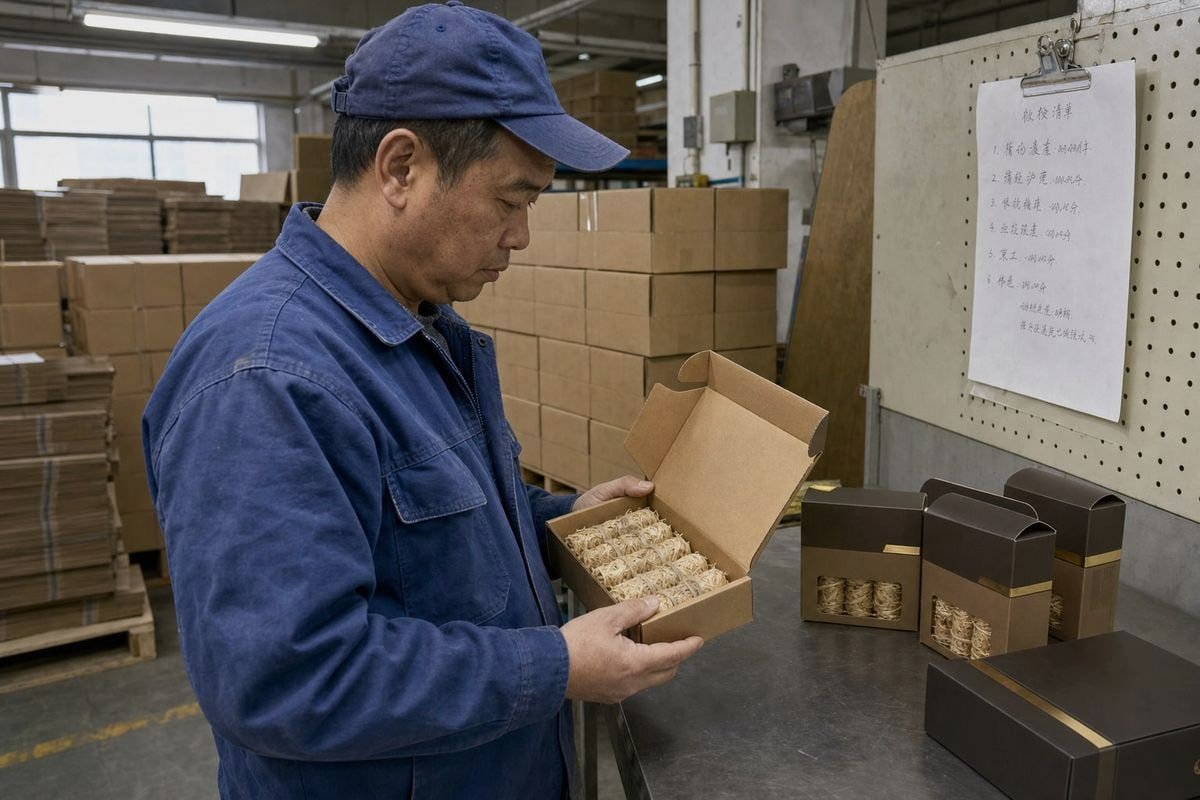
Premium-Verpackungen für Holzanzünder scheitern häufiger als das Produkt selbst SGS/Intertek-Zertifizierungen 1. Ich habe großartige, in Wachs getauchte Holzrollen gesehen, die ihre Einzelhandelsplatzierung verloren haben, weil sich die Schachtel billig anfühlte, Feuchtigkeit aufnahm oder das falsche Sicherheitsetikett trug. In unserer Produktionslinie in Ningbo behandeln wir Verpackungen zuerst als Barriere und dann als Markenwert – und diese Denkweise wird Ihnen dieser Leitfaden vermitteln.
Spezifizieren Sie Premium-Verpackungen für Holzanzünder mit FSC-zertifiziertem Karton oder Kraftsubstraten, einer feuchtigkeitsbeständigen Barriere, umweltfreundlichen Sojafarben und Veredelungen wie matter Laminierung oder Heißfolienprägung. Kombinieren Sie konforme Sicherheitskennzeichnungen und klare Gebrauchsanweisungen mit einer Druckmethode, die auf Ihr Bestellvolumen und Ihre Einzelhandelskategorie abgestimmt ist.
Das ist die kurze Antwort. Nun führe ich Sie durch jede Entscheidung in der Reihenfolge, in der ein echter Käufer damit konfrontiert würde: Material, Konformität, Druckveredelung und wie man eine Testbestellung bei einer Fabrik wie unserer durchführt.
Welche Materialien sollte ich für umweltfreundliche und brandsichere Verpackungen für Holzanzünder wählen?
Während einer Qualitätskontrolle vor einigen Wintern öffneten wir einen zurückgesandten Karton von einem niederländischen Händler und fanden Wachsblüten an den Innenwänden. Der Karton hatte keine Barrierebeschichtung. Diese einzelne Spezifikationslücke kostete den Käufer eine Nachproduktion – und lehrte uns, das Substrat immer zuerst auf die Produktchemie abzustimmen.
**Wählen Sie FSC-zertifizierten Karton oder Kraftpapier mit hohem GSM und einer feuchtigkeitsbeständigen Barrierebeschichtung für umweltfreundliche, brandsichere Verpackungen für Holzanzünder. Papierbasierte Strukturen bleiben recycelbar und hochwertig, während die Barriere Feuchtigkeit und Wachswanderung blockiert. Kunststoff-Innenschläuche sollten nur für Märkte mit extremer Luftfeuchtigkeit reserviert werden.
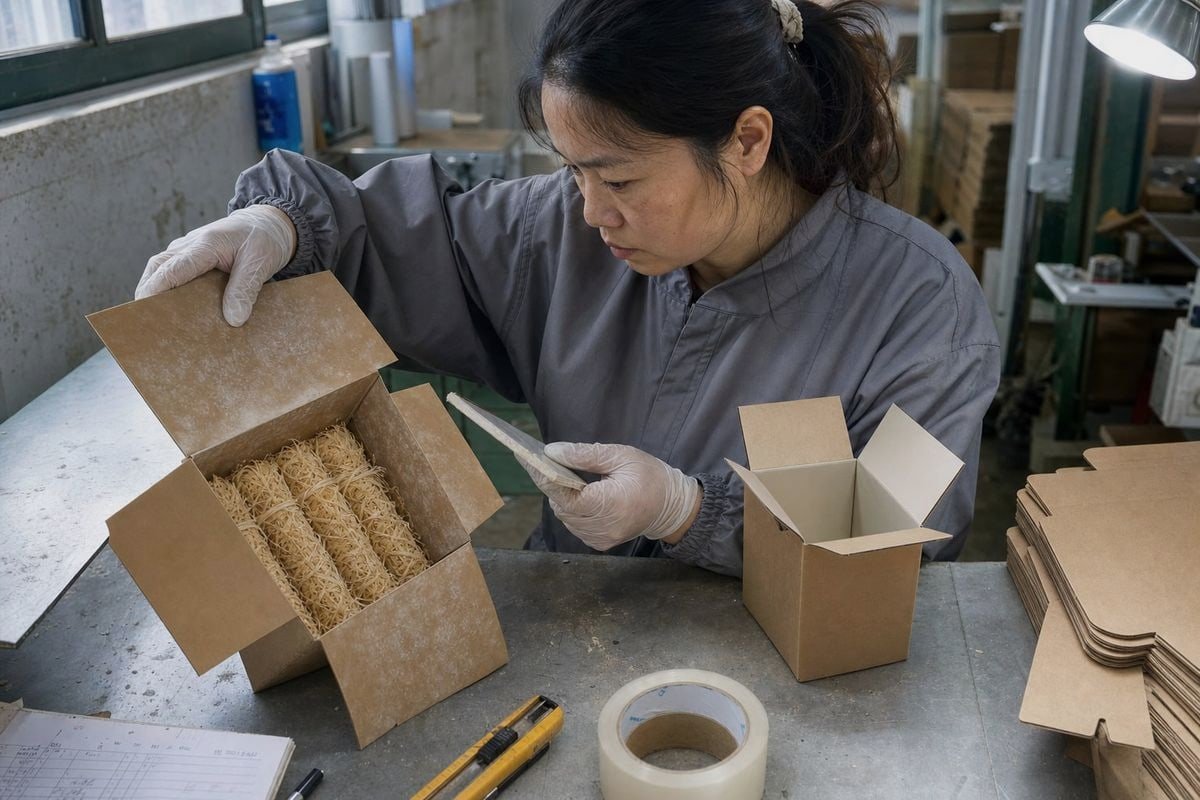
Holzanzünder sind ein Wachs-Holz-Produkt. Diese Kombination schafft zwei Verpackungsfeinde: Feuchtigkeit, die eindringt, und Wachs oder Geruch, der austritt. Ihre Materialspezifikation muss beides bewältigen, ohne Ihre Nachhaltigkeitsgeschichte zu beeinträchtigen.
Vergleichen Sie zuerst die wichtigsten Substratoptionen
So gestalten wir die Auswahl für Käufer, die nachhaltige Verpackungsmaterialien vergleichen:
| Material | Barriereleistung | Öko-Geschichte | Hochwertiges Gefühl | Beste Verwendung |
|---|---|---|---|---|
| Funktionales Papier mit Barrierebeschichtung | Hoch | Stark (in Papierkreisläufen recycelbar) | Hoch | Hochwertiger Export-Einzelhandel |
| Ungebleichtes Kraftpapier (hohes GSM) | Mittel (benötigt Beschichtung) | Stark | Mittel-hoch | Marken mit natürlicher Positionierung |
| Faltschachtelkarton | Allein niedrig-mittel | Gut, wenn FSC-zertifiziert | Hoch mit Veredelungen | Regalverkauf und Geschenke |
| Stabile Schachtelkonstruktion | Mittel | Moderat | Sehr hoch | Geschenksets, Boxen für die zweite Nutzung |
| Kunststoffhülse oder -beutel | Sehr hoch | Schwach | Niedrig-mittel | Feuchte Klimazonen, Großpackungen |
Für die meisten Premium-Programme empfehlen wir eine papierbasierte Struktur: ein FSC-zertifizierter Karton 2 Außenkarton mit einer internen feuchtigkeitsbeständigen Barriere. Dies hält die Verpackung recycelbar und schützt die Zündleistung während des Seefracht- und Lagerungsprozesses.
Passen Sie das Material an die Chemie des Produkts an
Wachsgetauchte Holzrollen übertragen langsam Paraffin oder Pflanzenwachs 3 auf jede unbeschichtete Oberfläche, die sie berühren. Die innere Schicht benötigt daher Fettbeständigkeit 4, nicht nur Wasserbeständigkeit. Wir vermeiden auch stark duftende Klebstoffe und Beschichtungen. Viele unserer Käufer verkaufen "natürliche, geruchlose" Anzünder für den Einsatz in der Nähe von Pizzaöfen und Grills, und eine chemisch riechende Schachtel untergräbt diesen Anspruch sofort.
Wiederverschließbarkeit ist ebenfalls wichtig. Große Haushaltsverpackungen profitieren von einem wiederverschließbaren Beutel oder einer Steckschachtel, da Kunden Anzünder über Wochen verwenden und sie zwischen den Bränden trocken halten müssen. Speziell gestanzte Fenster eignen sich gut für Geschenkformate – Käufer lieben es, die Holz-Woll-Textur zu sehen – aber jedes Fenster ist ein Loch in Ihrer Barriere, daher kleben wir Fenster nur dann mit einer transparenten Folie ab, wenn der Kanal wirklich Sichtbarkeit erfordert.
Wie kann ich sicherstellen, dass meine bedruckte Verpackung internationale Konformitäts- und Kennzeichnungsanforderungen erfüllt?
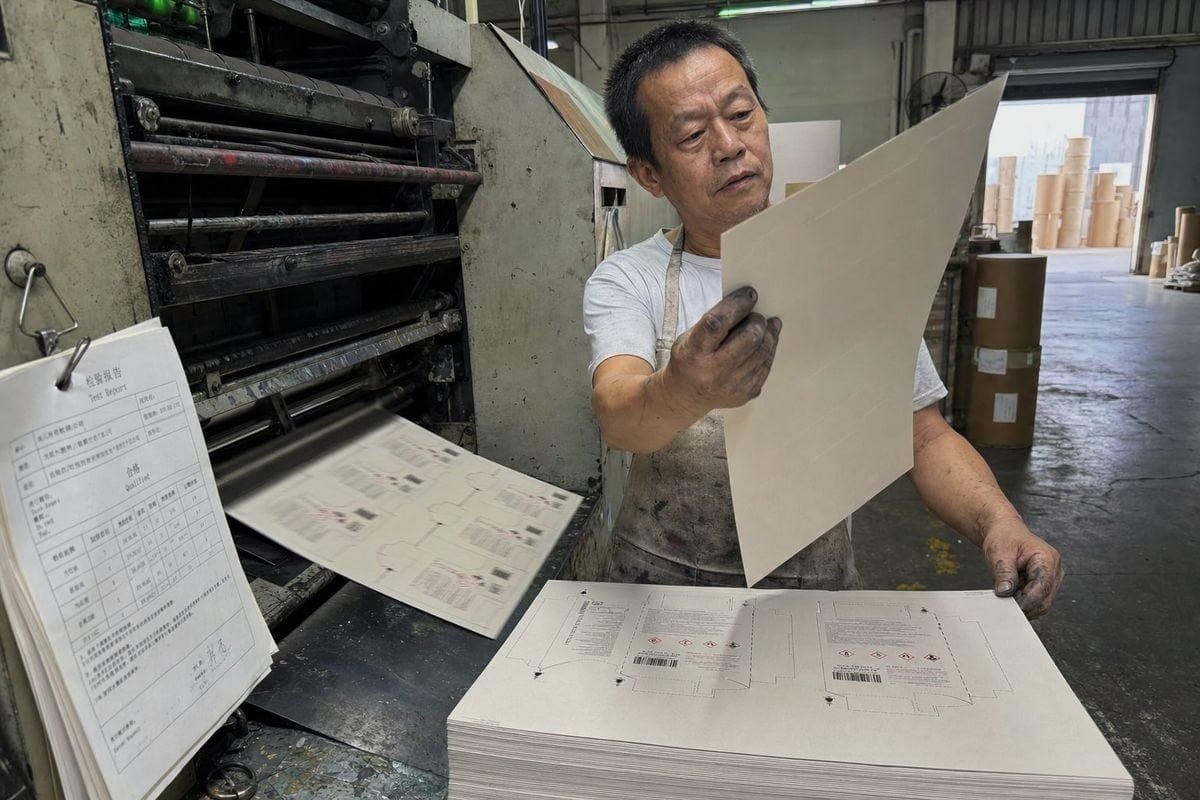
Eine Lektion, die wir in unseren über 17 Jahren Exporterfahrung früh gelernt haben: Eine schöne Schachtel, die keine Zollkontrolle besteht, ist wertlos. Ein deutscher Käufer bat uns einmal, das Artwork drei Tage vor dem Druck zu überarbeiten, da die Größe des Gefahrenpiktogramms nicht den EU-Erwartungen entsprach – jetzt überprüfen wir jede Etikettendatei, bevor die Druckplatten hergestellt werden.
**Stellen Sie die Konformität sicher, indem Sie die erforderlichen Gefahrensymbole, Sicherheitshinweise, Zusammensetzung der Inhaltsstoffe, Nettogewicht oder Stückzahl, Chargenrückverfolgbarkeit, Barcodes und Herstellerdetails in der Sprache des Ziermarktes angeben. Überprüfen Sie Behauptungen wie "recycelbar" oder "natürlich" anhand von Zertifizierungen und bestätigen Sie Layouts mit Testdokumentationen im SGS- oder Intertek-Stil, bevor Sie drucken.

Anzünder fallen in eine sensible Kategorie. Es handelt sich um brennbare Güter 5 , die für Innenkamine, Holzöfen und lebensmittelnahe Anwendungen wie Pizzaöfen verkauft werden. Regulierungsbehörden und Einzelhandelsketten prüfen die Verpackungstexte genau. Daher raten wir Käufern, den Etiketteninhalt vor dem Design zu erstellen, nicht danach.
Die nicht verhandelbaren Etikettenelemente
- Produktidentität und Verwendungszweck – Kamin, Grill, Camping, Pelletofen.
- Zusammensetzungsangabe – zum Beispiel Holzfaser- und Wachsprozentsätze.
- Entflammbarkeitswarnungen und "von Kindern fernhalten"-Hinweise, gut lesbar.
- Gebrauchsanweisung – typischerweise "einen Anzünder unter das Anzündholz legen und anzünden"."
- Nettogewicht und Stückzahl, klar auf der Vorderseite angegeben.
- Charge oder Losnummer zur Rückverfolgbarkeit, plus Barcode für den Einzelhandels-Scan.
- Name und Adresse des Herstellers oder Importeurs gemäß den Marktregeln.
- Sprachversionen passend zu jedem Zielland.
Anspruchsdisziplin: Sagen Sie nur, was Sie beweisen können
Hier geraten Marken in Schwierigkeiten. So trennen wir sichere Aussagen von riskanten:
| Behauptung | Drucksicher? | Zustand |
|---|---|---|
| Wasserabweisende Verpackung | Ja | Unterstützt durch Barriere-Spezifikation |
| Wasserdicht | Riskant | Nur mit Tauchtest |
| 100% natürlich | Bedingt | Die Formulierung darf keine synthetischen Paraffine enthalten |
| Recycelbar | Bedingt | Muss lokalen Recyclingströmen entsprechen |
| FSC-zertifiziert | Ja | Nur mit gültiger Chain-of-Custody-Dokumentation |
| Geruchlos / lebensmittelverträglich angrenzend | Bedingt | Benötigt konservative Formulierungen und Testunterstützung |
Unsere Fabrik verfügt über ISO 9001 6, BSCI, CE und SGS/Intertek-Zertifizierungen, und wir liefern Prüfberichte mit den Lieferungen. Für unsere US- und europäischen Käufer ist diese Dokumentation eine zwingende Voraussetzung, kein Nice-to-have. Wir empfehlen außerdem umweltfreundliche Sojafarben und tintenfreie Schwermetallformulierungen. Da einige Verbraucher die Verpackung tatsächlich als zusätzliches Zunder verbrennen, sind Clean-Burn-Tintenspezifikationen eine echte Sicherheitsüberlegung, nicht nur ein Marketingpunkt.
Welche Druck- und Veredelungsoptionen können meiner Marke helfen, sich in den Regalen des Einzelhandels abzuheben?
Der Kompromiss, den ich am häufigsten mit Käufern abwäge, ist einfach: wie viel Budget für die Veredelung liefert echte Einzelhandels-Regalattraktivität, und wo wird sie zur Dekoration um ihrer selbst willen? Eine Premium-Veredelung sollte ihre Kosten durch die Steigerung des wahrgenommenen Wertes aus drei Metern Entfernung verdienen.
Direkter Offsetdruck mit matter Kaschierung bietet die stärkste Premium-Basis. Fügen Sie Heißfolienprägung auf dem Logo, Spot-UV-Veredelung auf Flammen-Grafiken oder geprägte Texturen für taktile Luxus hinzu. Für Testbestellungen beginnen Sie mit Aufkleber-Etiketten oder bedruckten Verpackungen und rüsten Sie dann auf, wenn die Mengen wachsen.

Druckverfahren und Veredelung entscheiden, ob Ihre Verpackung als billiger Baumarkt-Füller oder als geschenkfähiges Kaminprodukt wahrgenommen wird. Lassen Sie mich die Leiter aufschlüsseln, durch die wir Käufer führen.
Die dreistufige Druckleiter
| Tier | Methode | Kosten | Premium-Signal | Typische Verwendung |
|---|---|---|---|---|
| Einstieg | Aufkleber-Etiketten auf Standardkartons | Am niedrigsten | Niedrig | Markttest, niedrige MOQ |
| Mittel | Bedruckte Wrapper oder Flexo-Beutel | Mittel | Mittel | Einzeln verpackte Starter |
| Premium | Direkter Offsetdruck auf Kartons | Höher | Hoch | Einzelhandelsketten, Exportprogramme |
Aufkleberetikettierung ist der billigste Weg, einen Markt zu validieren. Benutzerdefinierte Wrapper eignen sich für einzeln verpackte Starter und geben jeder Einheit Platz für Anweisungen und Branding. Direkter Offsetdruck ist die Premium-Route – er hält feine Details, hält die Farbe von Charge zu Charge konsistent und druckt Sicherheitstexte lesbar, selbst auf strukturierten Naturmaterialien.
Veredelungen, die Premium signalisieren, ohne die Recyclingfähigkeit zu beeinträchtigen
Matte Kaschierung leistet doppelte Arbeit: Sie fügt eine subtile feuchtigkeitsbeständige Schicht 7 hinzu und tötet Blendung unter Einzelhandelsbeleuchtung. Soft-Touch-Beschichtungen vertiefen den taktilen Eindruck. Heißfolienprägung in Kupfer oder Gold passt wunderbar zu Flammen-Grafiken und dunklen Hintergründen – denken Sie an die glänzende schwarze Box mit orangefarbener Flammen-Grafik, die diese Kategorie dominiert. Spot-UV-Veredelung lässt eine Flammen-Grafik auf einem matten Feld glänzen, was vom anderen Ende eines Ganges die Blicke auf sich zieht. Geprägte Texturen auf einem Logo oder einem Holzmaser-Motiv verstärken die natürliche Positionierung durch Berührung, nicht nur durch Sehen.
Eine Vorsichtsmaßnahme von unserer Druckerei: Wenn Sie zu viele gemischte Veredelungen stapeln, können Sie die Recyclingfähigkeit beeinträchtigen. Wir helfen Käufern, ein oder zwei Helden-Veredelungen statt fünf konkurrierender auszuwählen. Zurückhaltung sieht normalerweise teurer aus als Exzess.
Wie arbeite ich mit einem Hersteller zusammen, um Verpackungsmaterialien und Druck für eine Testbestellung anzupassen?
Ein britischer Käufer schickte uns letztes Jahr eine E-Mail mit nur einer Logo-Datei und einem Zielverkaufspreis. Neunzig Tage später waren seine Private-Label-Feuerstarter-Kartons im Regal. Dieses Projekt funktionierte, weil wir einem strukturierten Testbestellprozess folgten – und keine der Schritte ausließen.
Beginnen Sie mit einem schriftlichen Verpackungsspezifikationsblatt, das Substrat, Barriere, Verschluss, Druckverfahren und erforderliche Kennzeichnung abdeckt. Fordern Sie physische Muster und einen White-Label- oder Sticker-Label-Pilotlauf von etwa 1.000 Einheiten an, bestätigen Sie die Compliance-Dokumente und skalieren Sie dann auf direkt bedruckte Premium-Verpackungen, sobald die Verkaufsdaten dies unterstützen.
Die meisten Fehler bei Testbestellungen lassen sich auf vage Spezifikationen zurückführen. Die Lösung ist ein disziplinierter, gestufter Prozess. Hier ist der, den wir mit unseren OEM/ODM-Kunden in über 30 Ländern durchführen.
Der Sechs-Schritte-Testbestellprozess
- Definieren Sie das Spezifikationsblatt. Legen Sie Substrat und GSM, Barriereart, Boxstruktur, Verschlussart, Druckverfahren, Ausrüstungsliste und jedes obligatorische Etikettenelement fest. Wir stellen eine Vorlage zur Verfügung, damit nichts übersehen wird.
- Physische Muster prüfen. Wir versenden unbedruckte Strukturmuster sowie Muster von Oberflächenbehandlungen – matte Laminierung, Folienfarben, geprägte Texturen – damit Sie mit Ihren Händen beurteilen können, nicht mit einem Bildschirm.
- Führen Sie einen Pilotlauf mit niedriger Mindestbestellmenge durch. Rund 1.000 Einheiten mit Aufklebern oder einfachen bedruckten Verpackungen sind ein realistischer Maßstab für die erste Bestellung. Dies hält die Werkzeugkosten minimal, während Sie den Markt testen.
- Prüfen Sie die Konformität frühzeitig. Wir teilen unsere ISO 9001-, BSCI-, CE- und SGS/Intertek-Dokumentation im Voraus und stimmen die Grafiken mit den Kennzeichnungsvorschriften Ihres Marktes ab, bevor die Druckplatten hergestellt werden.
- Genehmigen Sie ein Vorproduktionsmuster. Da wir unsere eigenen Produktionslinien kontrollieren, spiegelt das erste Muster zuverlässig die Qualität der Massenproduktion wider – hier zahlen sich über 17 Jahre Chargen-zu-Chargen-Qualitätskontrolle aus.
- Skalieren Sie mit Zuversicht. Sobald der Abverkauf das Konzept bestätigt, rüsten Sie auf Offsetdruck, FSC-zertifizierten Karton und Premium-Veredelungen um und lassen Sie uns die Kartonabmessungen für die Containerbeladung optimieren.
Stellen Sie während dieses Prozesses Ihrer Fabrik harte Fragen. Können sie Daten von Barriereprüfungen vorlegen? Drucken sie intern oder beauftragen sie externe Dienstleister? Halten sie Farbstandards bei Nachbestellungen ein? Ein echter One-Stop-Partner kümmert sich unter einem Dach um kundenspezifische Kartons, Display-Verpackungen, Warnetiketten, Barcodes und Logistik – genau so strukturieren wir unseren Private-Label-Service.
Schlussfolgerung
Schwache Verpackungen töten gute Feuerstarter leise – durch Feuchtigkeit, fehlende Konformität oder eine billige Präsenz im Regal. Spezifizieren Sie zuerst die Barriere, dann die Marke und arbeiten Sie mit einer zertifizierten Fabrik zusammen, die die Qualität beweist, bevor Sie skalieren.
Fußnoten
Aktualisierte Live-URL für SGS-Verpackungsdienste, die den 404-Link ersetzt. ↩︎
Offizielle Seite des Forest Stewardship Council, die die Zertifizierungsstandards für nachhaltige Karton- und holzbasierte Verpackungsmaterialien erklärt. ↩︎


 English
  Spanish
  German
  French
  Arabic
  Portuguese
Diskutieren Sie mit