






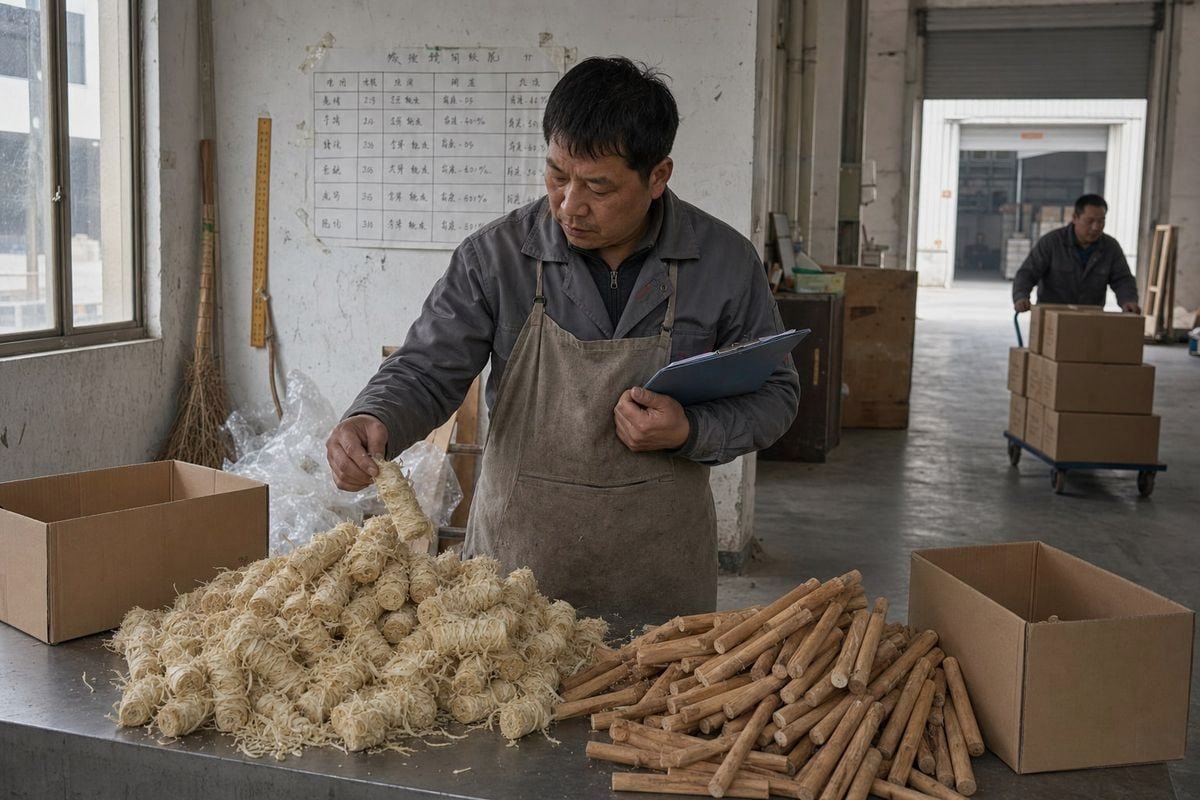
Adjusting your wood fire starter product mix by regional air quality regulations is now a survival skill. I learned this the hard way when a buyer's shipment stalled at customs over one missing test report. One noncompliant SKU can freeze an entire container, burn your margin, and damage retailer trust. On our production line in Ningbo, we solved this by building compliance into the formula itself — not bolting it on at the end.
To adjust a wood fire starter product mix by regional air quality regulations, map each market's VOC limits, particulate rules, and burn-ban policies first. Then split SKUs by region, use low-emission natural formulations, add compliant labeling, and demand third-party test reports from your supplier before shipping.
That answer sounds simple. In practice, "wood fire starter" is not one universal product. Let me walk you through how the rules differ, and how to build a portfolio that clears customs and satisfies regulators everywhere you sell.
What air quality certifications do I need before shipping wood fire starters to different regions?
A German distributor once asked me a question that reshaped how we run our export paperwork: "Which certificate stops my container at Hamburg?" The honest answer depends entirely on where the product goes next.
Required certifications vary by destination: US shipments to California may need CARB compliance for charcoal-adjacent lighter materials, EU markets expect CE marking and REACH-aligned safety data, and most large retailers demand SGS or Intertek test reports covering emissions, composition, and burn behavior.

The first thing I tell every new buyer is this: regulators rarely target "fire starters" as a single category. Instead, they regulate what your product emits, what it contains, and what it is used with. So your certification checklist changes depending on whether the starter is sold for charcoal grills, fireplaces, wood stoves, or fire pits.
The three regulatory models you must know
There are three dominant models worldwide, and your product mix should reflect all three:
| Regulatory Model | Example Region | ما يتحكم فيه | What You Need |
|---|---|---|---|
| VOC certification | California (CARB, SCAQMD) | Volatile Organic Compounds per ignition start | Lab testing, certification, compliant labels |
| Smoke curtailment | Bay Area, UK smoke control areas | PM2.5 particulate matter, burn-ban compliance | Low-smoke formulas, careful usage claims |
| Fuel quality | New Zealand, Western Australia | Wood moisture content, appliance emissions | Instructions assuming seasoned wood under 20% moisture |
California is the strictest example on the VOC side. Charcoal lighter materials sold there must emit no more than 0.020 pounds of VOCs per start, and products need ARB certification 1 with proper labeling. If your wax-based starter is marketed for charcoal ignition, it can fall into this bucket. In the South Coast AQMD 2 area, district certification under Rule 1174 applies on top of state rules.
In our experience exporting to 30+ countries, the safest workflow is to certify against the strictest market in your distribution plan. Our ISO 9001 3 and BSCI systems mean each production batch is documented, so when a buyer asks for a fresh SGS or Intertek report for a specific market, we can trace the exact batch and formulation. That traceability is what customs officers and retail compliance teams actually check.
Also remember that EPA emission standards 4 for wood-burning appliances shape the indirect market. Modern certified stoves burn cleaner, and retailers increasingly want starters that support that cleaner burn rather than fight it.
How do I choose low-emission wood fire starter formulas that comply with strict EU and US regulations?
There is a trade-off we weigh in every formulation meeting: ignition speed versus emission profile. A petroleum-heavy starter lights fast and looks impressive in demos. But it is exactly what strict regulators are phasing out.
Choose formulas built on natural wood fiber, wood wool, or compressed sawdust bound with clean-burning paraffin or vegetable wax. Avoid petroleum solvents, plastics, and treated wood. These low-emission firelighters minimize VOCs and PM2.5 particulate matter while still delivering reliable, hot ignition.
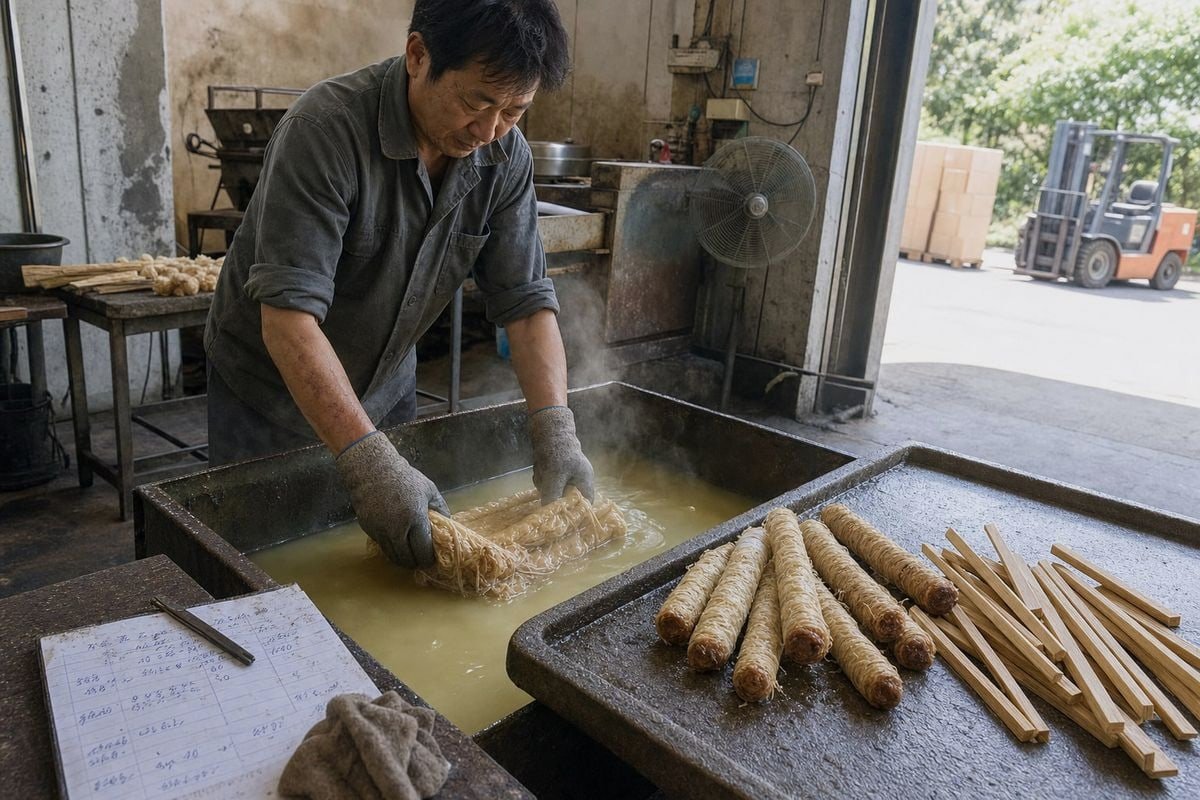
When we developed our wax-dipped wood rolls, we tested dozens of wax-to-fiber ratios. The lesson was clear: emissions depend on chemistry and on burn structure. A tightly wound wood-wool starter 5 with the right wax loading gives a hot, steady flame with far less visible smoke than a solvent-soaked block. That matters in smoke control areas across the UK and in US air districts that issue burn ban restrictions during high-pollution days.
What to include and what to exclude
Here is the practical formulation checklist I share with product development managers:
| مكون | Compliant Choice | تجنب |
|---|---|---|
| مادة القاعدة | Natural wood fiber, wood wool, sawdust | Treated wood, plastics, rubber |
| المادة الرابطة | Food-grade paraffin, vegetable wax | Petroleum solvents, kerosene-type accelerants |
| Additives | None, or certified-safe colorants | Chlorinated compounds, heavy metals |
| هيكل | Compressed, pre-measured units | Loose liquid or gel accelerants |
A 50/50 wood fiber and paraffin composition, like the one printed on our retail boxes, is a proven baseline. It burns hot enough to ignite kindling quickly, which shortens the smoky "cold start" phase that generates most startup particulates 6. That is the phase regulators care about most.
Match the formula to the regulatory model
For VOC-regulated markets, pre-measured solid starters are inherently safer than liquids because emissions per start are predictable and testable. For smoke-curtailment markets, prioritize eco-friendly kindling alternatives and starters that support top-down lighting, which cuts startup smoke sharply. For fuel-quality markets like Western Australia, where firewood over 20% internal moisture 7 cannot be sold in Perth without exemption, your instructions should assume seasoned wood — never position the starter as a rescue for wet logs.
One more trend worth watching: sustainable biomass fuels 8 and bio-char based "ultra-low emission" starters are gaining shelf space in urban European markets. They are a smart premium SKU for regions where PM2.5 scrutiny keeps tightening.
Can Sunrich help me customize wood fire starter blends for markets with varying air quality standards?
Last year, a Canadian importer came to us with an unusual request: one brand, three markets, three different compliance environments. Our answer was to build three SKU variants from one core product family — and that is exactly the kind of project our factory is set up for.
Yes. Sunrich offers full OEM/ODM customization of wood fire starter blends, adjusting wax ratios, burn time, size, and packaging per market. With 17+ years of production experience, ISO 9001 and BSCI systems, and SGS/Intertek test reports, we build regionally compliant SKUs from trial-order MOQs upward.
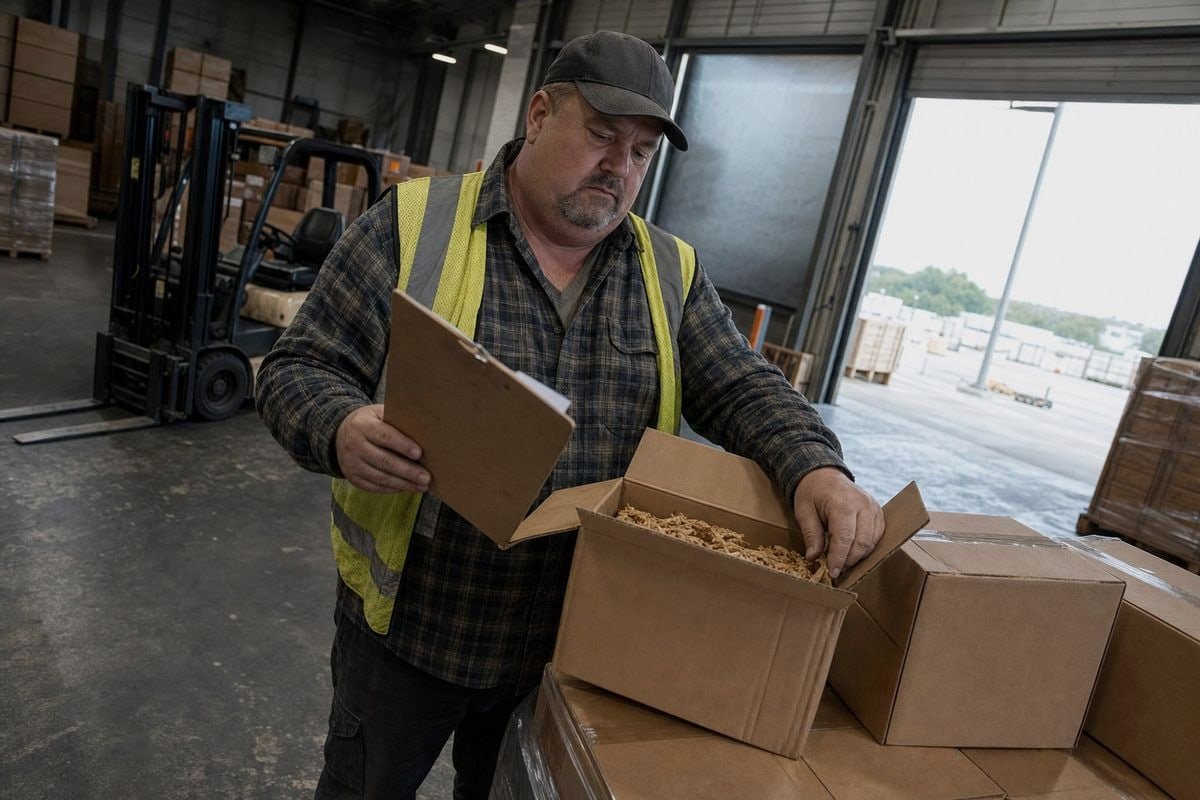
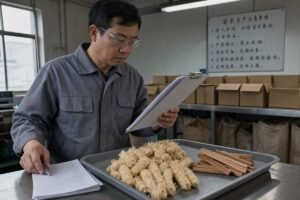
Let me be concrete about what customization means on our production floor in Ningbo, backed by our headquarters in Liuyang, Hunan. We are a real factory, not a trading company, which means formulation changes happen in-house with full batch-to-batch quality control. The sample you approve reliably reflects mass-production quality — a point our long-term buyers value more than any price quote.
How a regional customization project typically runs
- Market mapping. You tell us your target regions. We review the relevant rules together: VOC limits, smoke control areas, moisture content regulations, and labeling requirements.
- Formula adjustment. We tune the wood fiber, wax type, and wax loading for the emission profile each market demands. For strict urban markets, that usually means lower wax loading and denser fiber compression for cleaner ignition.
- Burn-time calibration. Burn time is adjustable. A starter for EPA-certified stoves needs a different burn curve than one for open fire pits.
- Packaging and labeling. We produce custom boxes, display packaging, warning labels, and barcodes. For regulated markets, we add composition disclosures, usage ratios, and manufacture-date coding.
- Testing and documentation. We arrange SGS or Intertek testing on the final formulation and supply reports tied to your specific SKU.
Why regional SKUs beat one universal formula
A single national formula simplifies logistics, but it forces you to certify everything against the strictest rule — often over-engineering products for lenient markets. A multi-SKU approach lets you sell CARB compliant fire starters in California, low-smoke variants in curtailment zones, and standard formulas elsewhere. Because we run complete production lines, the added complexity sits on our side, not yours. We also support flexible MOQs for trial orders, so you can test a regional variant before committing to full container volumes.
Our eco-friendly material policy — no harmful chemicals across our fire starters, color-flame products, and wax torches — means every custom blend starts from a clean baseline. That shortens the path to compliance in almost every jurisdiction.
What documentation should I request from my supplier to prove compliance with regional air quality rules?
Early in our export history, we learned a painful lesson: a buyer's retail listing was delayed for weeks because the test report we provided covered the right product but the wrong batch year. Since then, we treat documentation as part of the product itself.
Request third-party emissions and composition test reports (SGS or Intertek), certificates for ISO 9001, BSCI, and CE, safety data sheets, batch traceability records, and label proofs showing composition, usage instructions, and required disclosures. Verify every document matches your exact SKU and production batch.
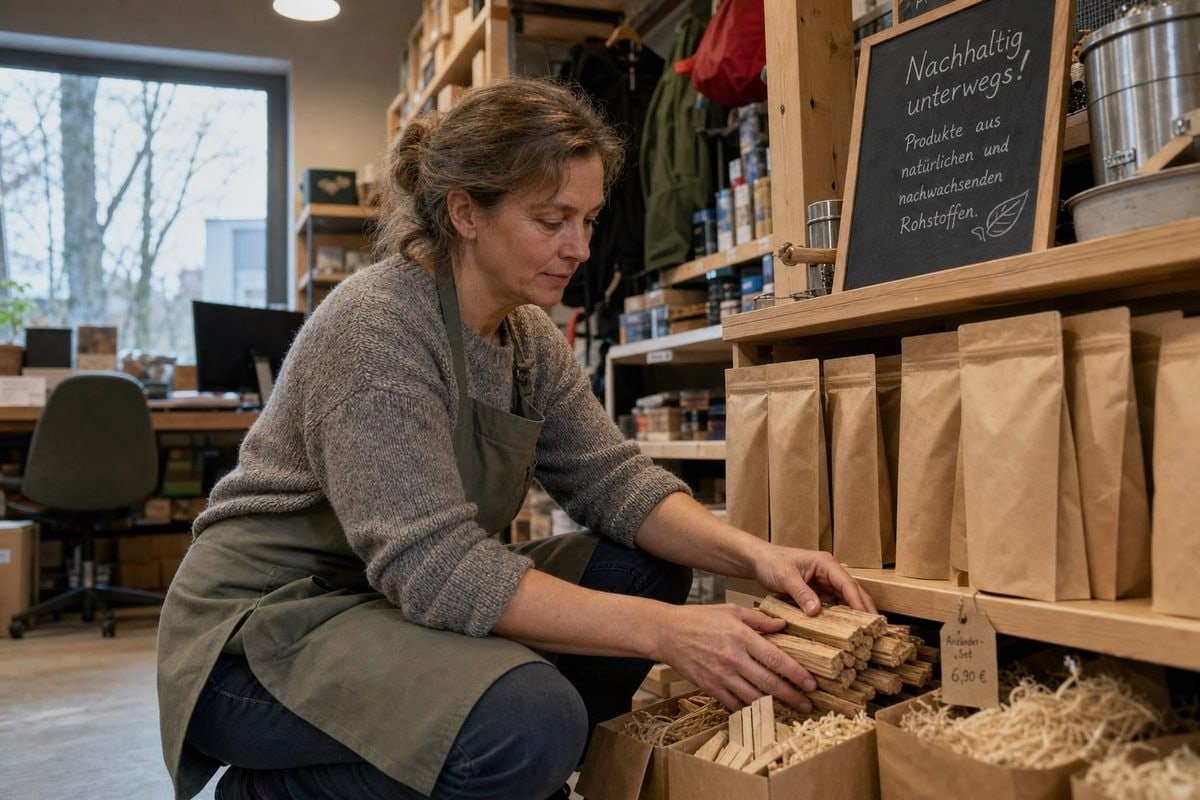
The core principle is simple: a claim without a document is a risk. When your customs broker, retail compliance team, or an air district inspector asks for proof, you need paper that matches the physical product on the shelf. Here is the documentation matrix I recommend every purchasing manager keep on file:
| وثيقة | ما يثبته | علامة حمراء إذا كانت مفقودة |
|---|---|---|
| Third-party test report (SGS/Intertek) | Emissions, composition, burn behavior | Supplier relies on self-declared data |
| شهادة ISO 9001 | نظام إدارة الجودة | Inconsistent batch quality risk |
| تقرير تدقيق BSCI | معايير الإنتاج الأخلاقية | Retailer onboarding delays |
| وثائق CE | التوافق مع سوق الاتحاد الأوروبي | Blocked EU customs clearance |
| صحيفة بيانات السلامة | Ingredient safety, handling | Cannot answer toxicity questions |
| Batch records with date codes | Traceability to production run | Report may not match shipped goods |
| Label proofs | Compliant claims and instructions | Mislabeling fines, product recalls |
Three verification habits that save you later
First, check dates. Test reports age, and formulations drift at careless factories. Ask when the report was issued and whether the formula has changed since. At our factory, strict batch-to-batch controls mean the answer is documented, not guessed.
Second, check scope. A report on a charcoal lighter formula does not cover a fireplace starter, even from the same supplier. The intended-use category matters to regulators.
Third, check claims against local rules. Labels must never imply the product allows burning during Spare the Air alerts, overrides burn ban restrictions, or works fine with green, high-moisture wood. Reviewing label language against each region's rules is cheap insurance — and it is a review we run with buyers before every private-label print run.
خاتمة
Regional air quality rules turn wood fire starters from a commodity into a compliance-driven portfolio. Map each market, split SKUs, demand documentation — and partner with a factory that builds compliance in from the first batch.
ملاحظات ختامية
1. California Air Resources Board sets the VOC certification rules referenced for charcoal lighter products. ↩︎
2. Official regulator whose Rule 1174 governs charcoal lighter emissions in the district. ↩︎
3. Official ISO standard page explaining the quality management system referenced for batch documentation. ↩︎
4. EPA Burn Wise program explains emission standards for wood-burning appliances mentioned in the article. ↩︎
5. Background on wood wool material used as a low-emission fire starter base. ↩︎
6. EPA explanation of PM2.5 particulate matter relevant to startup smoke emissions discussed. ↩︎
7. Background on firewood moisture content standards relevant to Western Australia's fuel-quality regulation. ↩︎
8. IEA bioenergy resource relevant to the emerging low-emission biomass fire starter trend discussed. ↩︎


 English
  Spanish
  German
  French
  Arabic
  Portuguese
انضم إلى المحادثة